Tertulias with Rosé is a series of public conversations created and hosted by Syd Krochmalny at Barro, New York. Starting with the exhibitions at the gallery, artists, curators and writers discuss art, politics, literature and the ways forms organize perception and collective life. The conversations were recorded, transcribed and edited for publication.
Conversation held on November 4, 2023.
The conversation
Alexandra Goldman (AG): Good afternoon, and welcome to Barro Gallery. I’m Alexandra Goldman, the gallery manager. It’s a pleasure to have you here for this special event, and I appreciate your attendance. Today, we’re hosting the sixth edition of our Tertulias With Rosé conversation series, coinciding with the closing reception of Mónica Giron’s solo exhibition Elemental Vortex, which concludes today, November 4th. Tertulia refers to a salon-style conversation, a tradition from 19th-century Spain and Latin America. We’ve had distinguished guest speakers at Barro New York, including Kerry Doran, Margot Norton, Warren Neidich, Reinaldo Laddaga, and Carlos Huffman.
We’re excited to welcome Nicolás Guagnini to today’s Tertulia, titled “Molecular Poetics,” discussing art ontology, perception technologies, nature, and Giron’s Elemental Vortex.
Nicolás Guagnini, born in Buenos Aires in 1966, is an artist, writer, and cofounder of Orchard Gallery New York and Union Gaucha Productions. His work, featured in international solo exhibitions and group shows, includes appearances at the Whitney in New York, the Museum of Modern Art in Buenos Aires, and galleries across Germany.
Joining us today for the conversation is Syd Krochmalny, an artist and writer with a PhD in Social Sciences from the University of Buenos Aires and postdoctoral studies from Columbia University. Krochmalny’s work has been showcased at institutions like Harvard University and the American Society University. He’s also an influential educator and has published several books.
Please enjoy their discussion, as well as the wine and cheese reception. We’re also excited about our next opening on November 15th, featuring the Argentinian collective Mondongo in a solo exhibition titled Welcome. We hope to see you there.
Syd Krochmalny (SK): Thank you, Alexandra, for the introduction. Nicolás, thanks for joining us. Our discussion, centred around Mónica Giron’s Elemental Vortex, broadens into the expansive themes embodied in ‘Molecular Poetry.’ This term, which at first seems contradictory, perfectly captures Giron’s artistic alchemy, transforming natural elements like water, earth, and air into poetic manifestations. Her work, resonant with Bachelard’s philosophies, personifies elemental forces and their intrinsic poetic essence, awakening our consciousness. We eagerly anticipate delving into the intersections of art, nature, and ontology, and encourage everyone to contribute their perspectives on Giron’s enthralling art.
Our exploration today is rooted in ‘Molecular Poetics’ within the realm of art, probing into how art decomposes to its fundamental elements to unveil its emotional and aesthetic essence. We’re not just admiring natural elements such as air, fire, earth, and water for their beauty, but also for their profound resonance. This method mirrors the philosophical ethos of reverting to fundamental principles, employing these elements as tools for exploration and expression. The vortex, a pivotal notion in molecular aesthetics, epitomizes the perpetual evolution and redefinition of systems in the universe and how we perceive the world. In this discourse, we aim to not only ponder these concepts but also to spur innovation. In Giron’s Elemental Vortex at BARRO NY, art emerges as a conduit linking humanity with the cosmos.
Molecular Poetics offers an introspective view of art, focusing on the intrinsic and fundamental aspects of a creation. Through this lens, we endeavour to comprehend how the basic building blocks of materials, akin to molecules, enhance the emotive, impactful, and aesthetic qualities of artistic expression. Natural elements like air, fire, earth, and water carry not just aesthetic value but also a transformative potency that resonates deeply within us. In this regard, Molecular Poetics aligns with the philosophical tenet of “returning to the things themselves,” functioning as a medium interacting with sensitive objects, where natural elements serve as means of exploration and portrayal.
Molecules, always in flux, form the essence of this analysis. Here, the vortex emerges as the epitome of molecular aesthetics. It symbolizes a rotational motion that births systems in the universe, initiating a dynamic that challenges and redefines our perceptions, thereby fostering creative rejuvenation.
The selection and manipulation of materials in art extend beyond mere physical interaction; it is fundamentally a perceptual act. It beckons us to engage with the “Technologies of Perception,” exploring how images crystallize in our minds and how, through our bodies and tools, consciousness interprets the environment, echoing the elemental structures.
Molecular Poetics is not just contemplative but also a call to innovation and a commitment to the future. From this standpoint, materials transcend their traditional role as simple tools, evolving into channels for expression and transformation.
In the Elemental Vortex exhibition by Mónica Giron at BARRO NY, we invite a dialogue on Molecular Poetics and Technologies of Perception. In this conversation, art becomes a bridge, linking ethics with nature, humanity with the cosmos.
Nicolás Guagnini (NG): First, I’d like to express my gratitude to everyone for attending today. I’m thankful to the gallery for this invitation and to Syd for reaching out to me. I also want to acknowledge Mónica, who, although not present, will likely scrutinize the transcript of this talk with great attention, and I appreciate her for enabling this kind of discourse.
When considering the concept of ‘molecular poetics,’ some might view it as an oxymoron. The term ‘molecules’ typically alludes to science or to the pseudo-scientific metaphors often associated with art. While ‘poetics’ is a broad term, I believe that an hour devoid of poetic elements would be lackluster. I’m intrigued by the idea of whether artwork can exist without poetics. In my view, if it’s an artwork, it inherently possesses poetic qualities.
In preparation, I reviewed Syd’s initial paper and delved into Mónica’s biography and several interviews. A recurring theme in her discussions is the multiplicity of entry points in her work. Approaching her work from conventional angles seems an egregious underuse of its potential. I’ve also examined the critical reception of her work since she began exhibiting. As an influential figure in my generation, both as an artist and an educator, she stands apart from specific movements or artist groups. She’s unique, with artists in their 40s and 30s having attended her workshops or classes. Her role as an educational influence is notable, yet her work remains elusive to follow. There’s no ‘school of Mónica,’ nor any close parallels to her style. This uniqueness makes her exhibitions irreplicable.
Regarding critical reception, discussions in the 90s included Argentine literature, Walter Benjamin, Gustavo Buntix, and others. As the discourse evolved, various theoretical approaches were applied to her work, yet none seemed definitive. Unlike Clement Greenberg’s theory of flatness with Jackson Pollock, no single theory encapsulates Mónica Giron’s work.
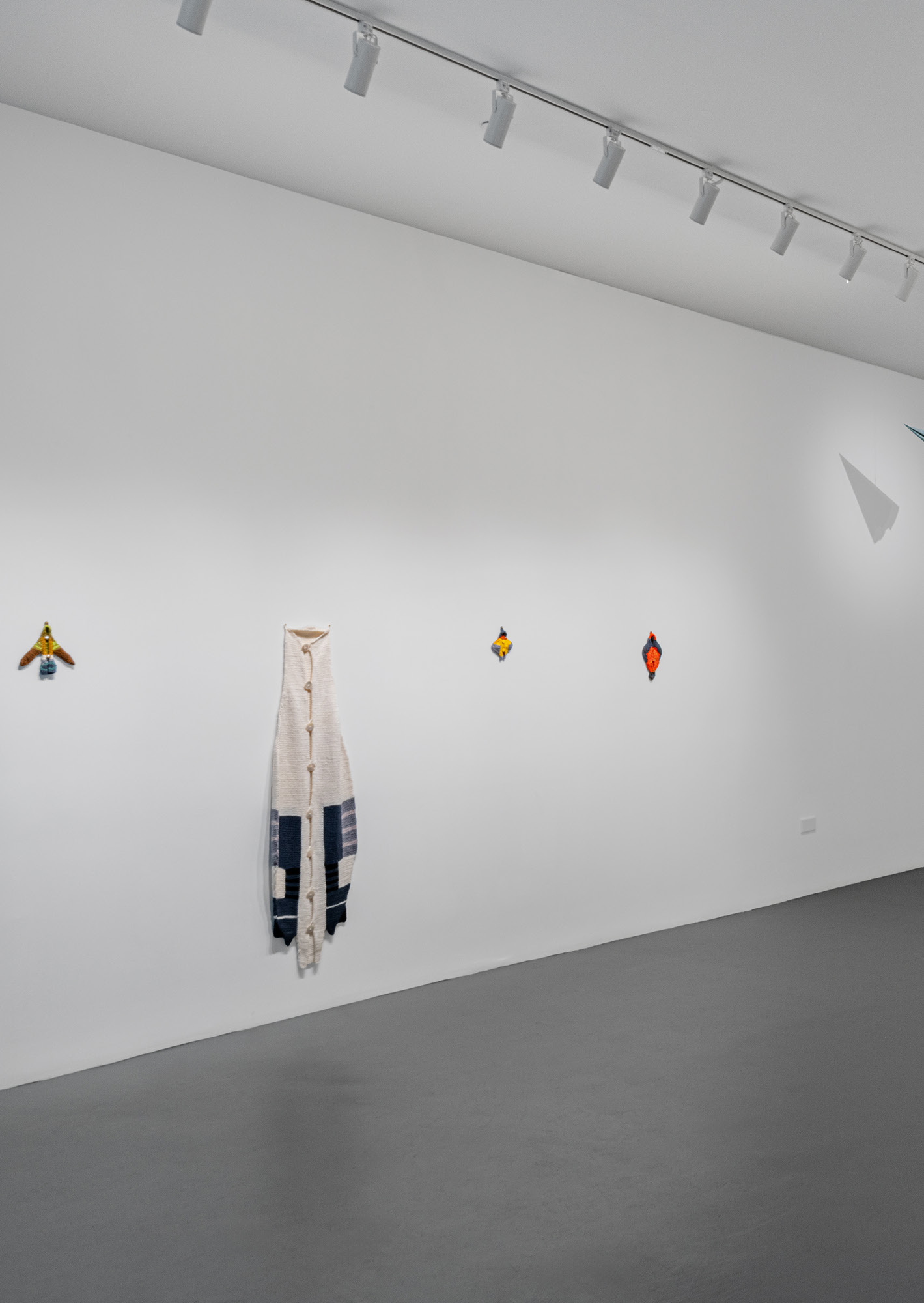
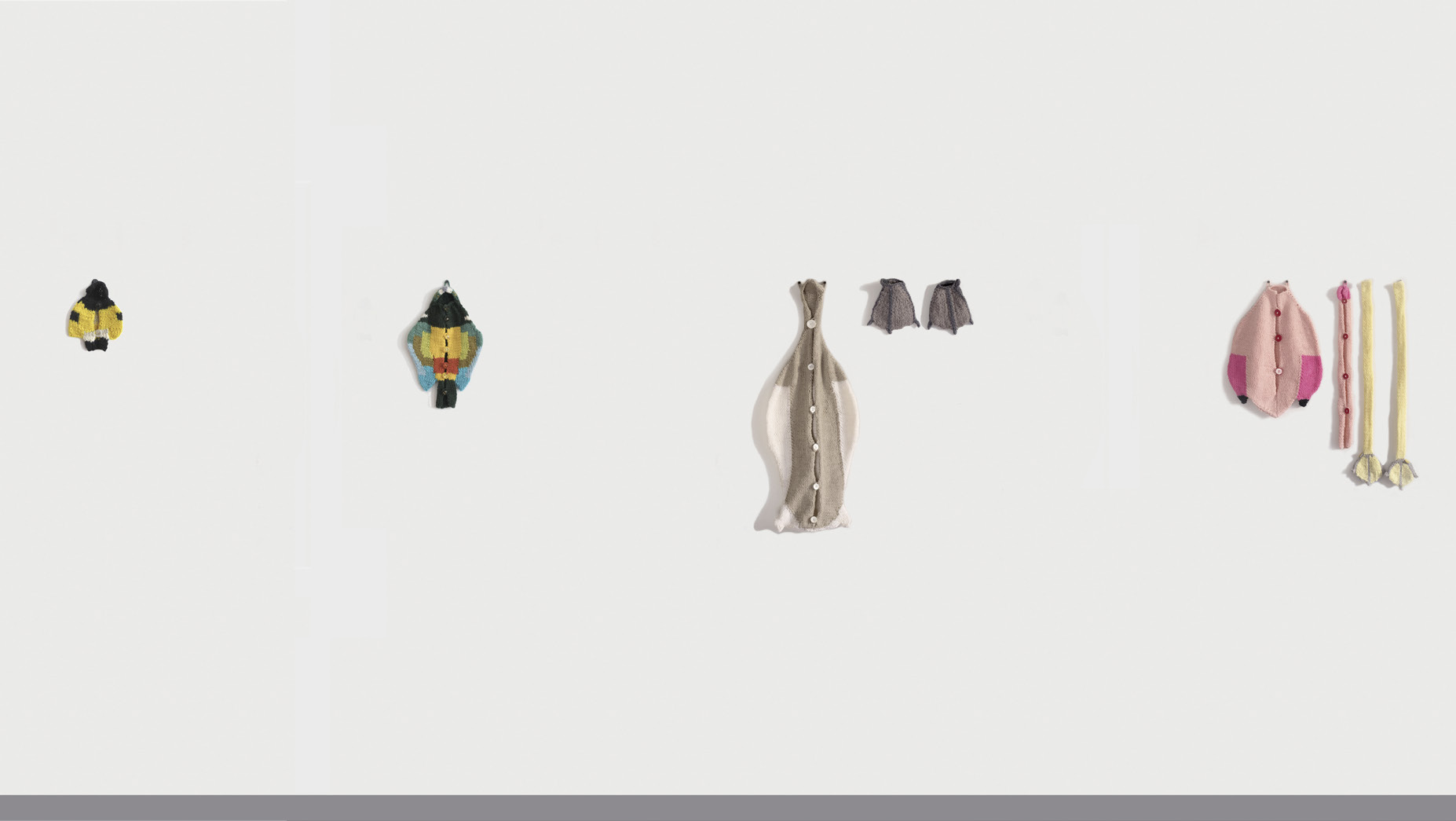
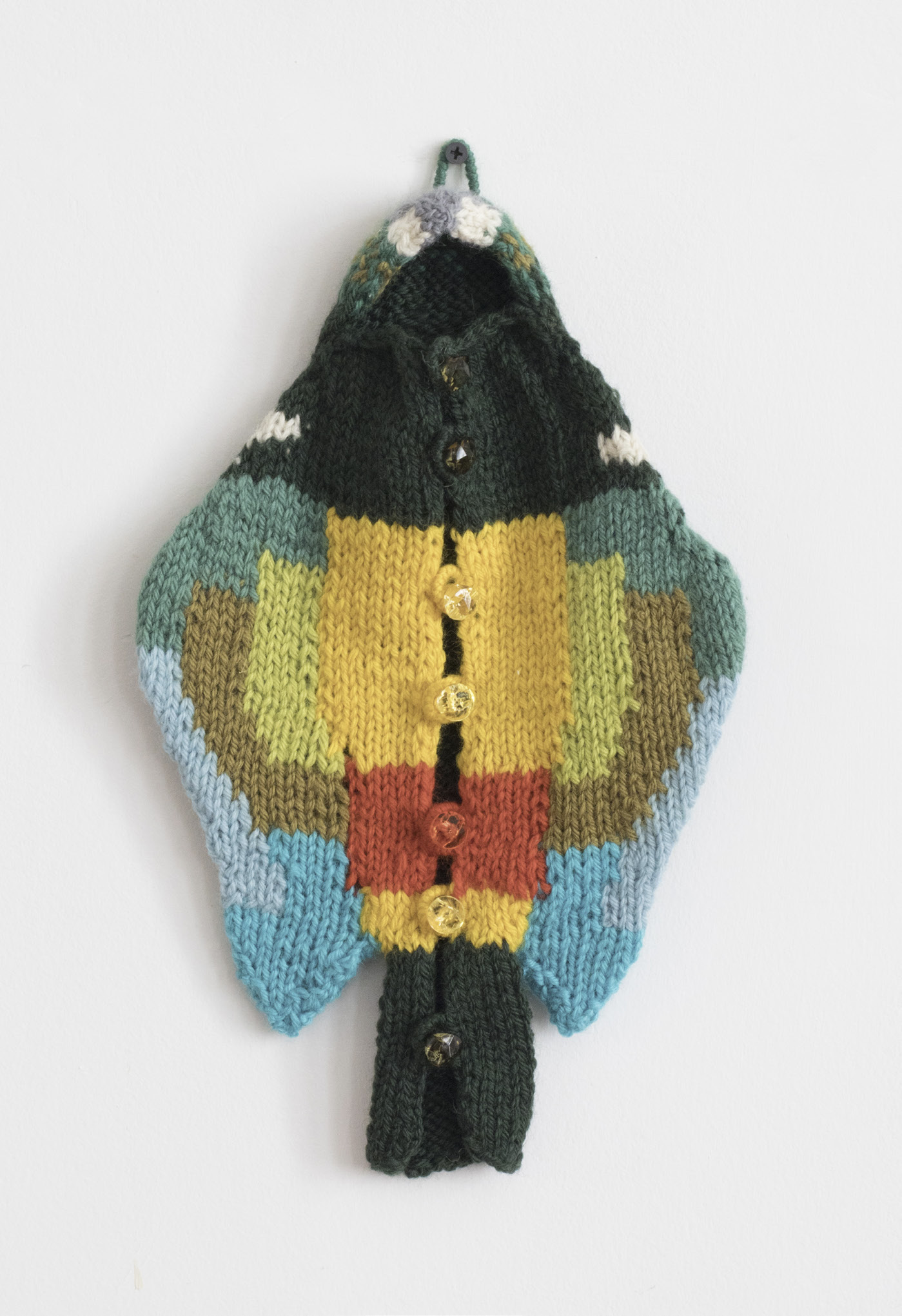
I’ve contemplated the concept of diverse entry points and believe the significance of her work lies in its challenge to today’s world. She doesn’t dictate what to think; her work offers multiple entry and exit points. For example, the piece Ajuar para un conquistador (Trousseau for a conqueror) opens up various interpretations.
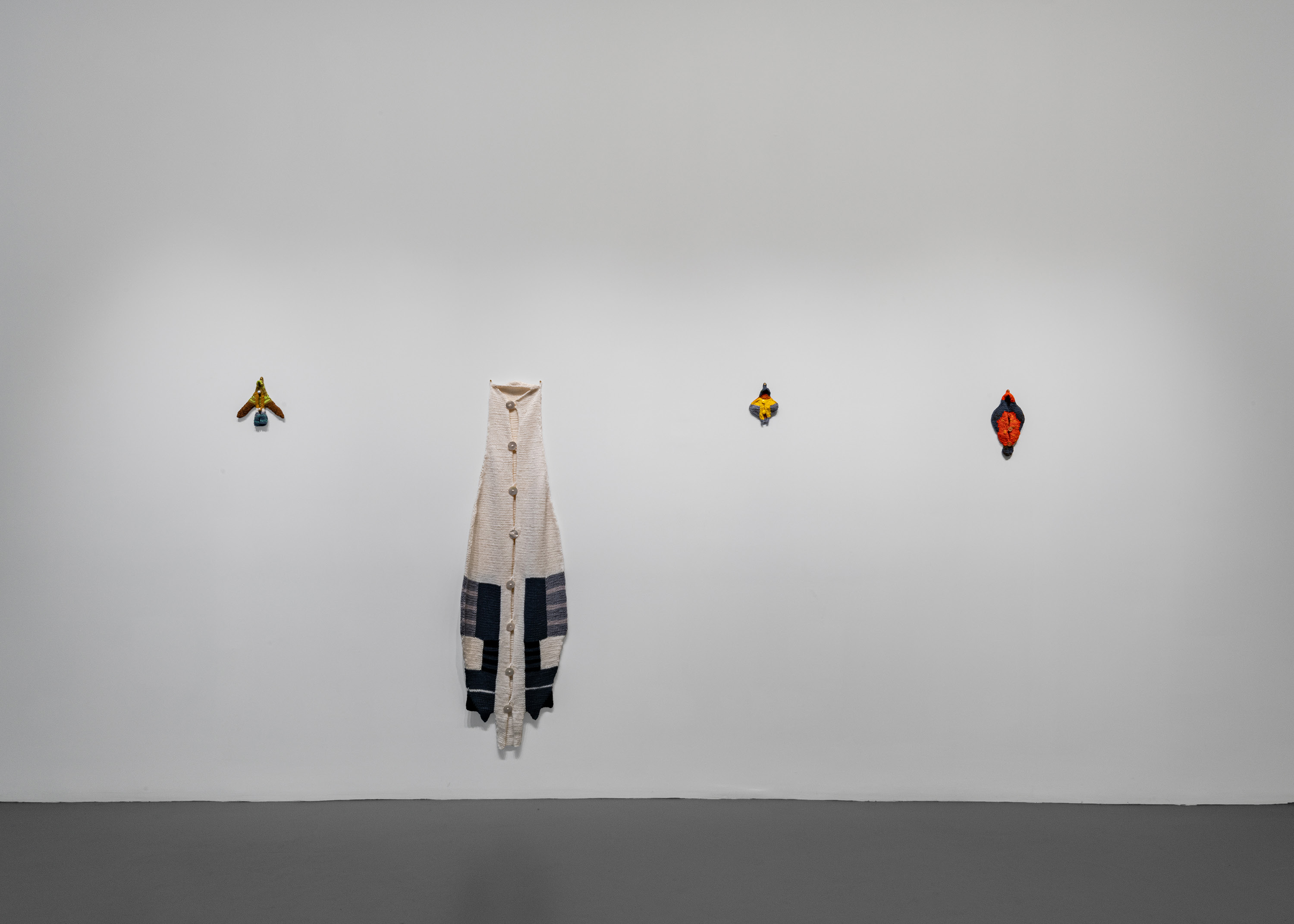
It could be seen through the lens of de-colonial theory or environmentalism. However, it also touches on craft, playfulness, and maternal instinct. The work offers entry points, but the exit lacks a definitive message, leaving the interpretation open-ended. This openness is deliberate, providing direction without confining the viewer to a singular interpretation.
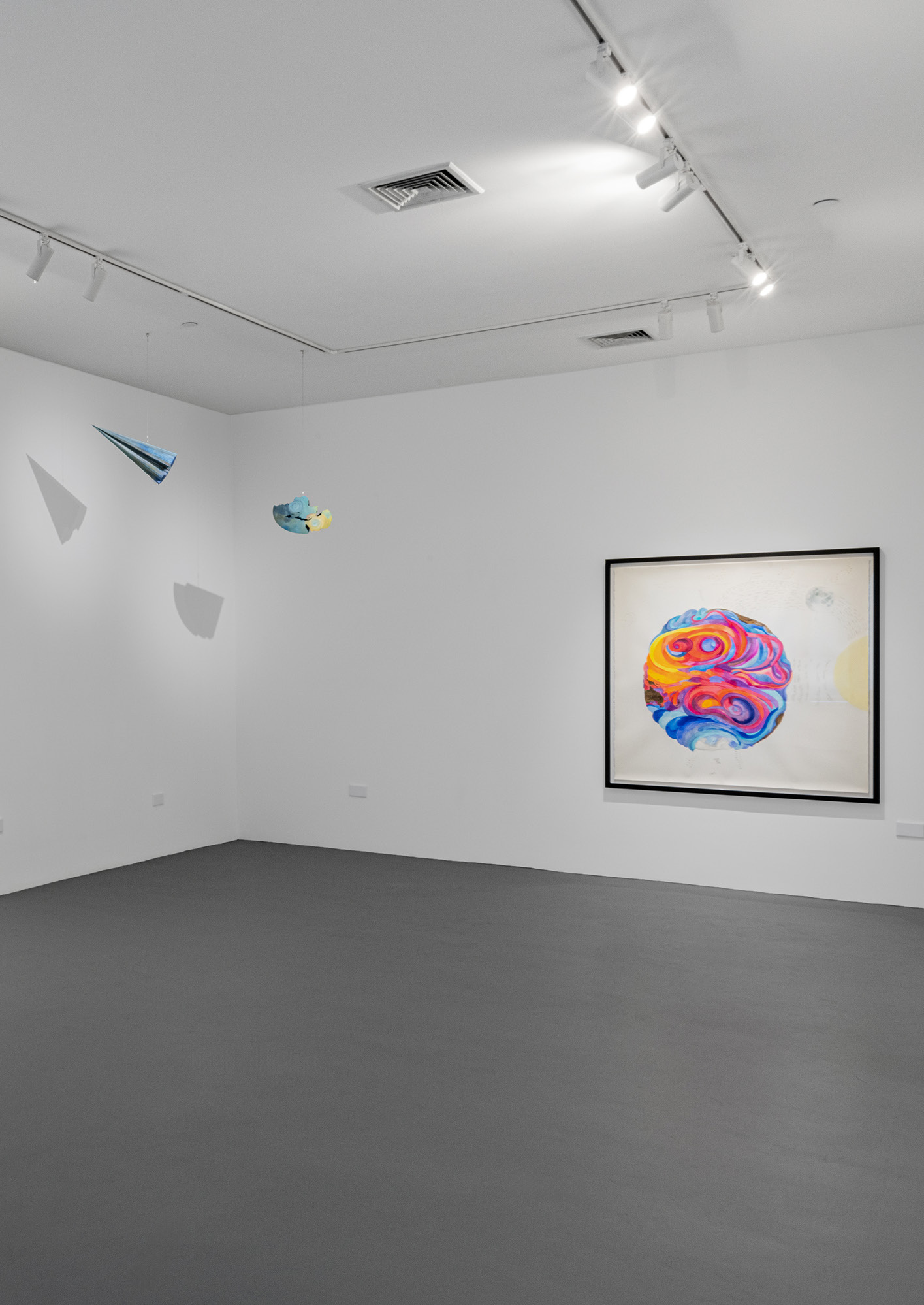
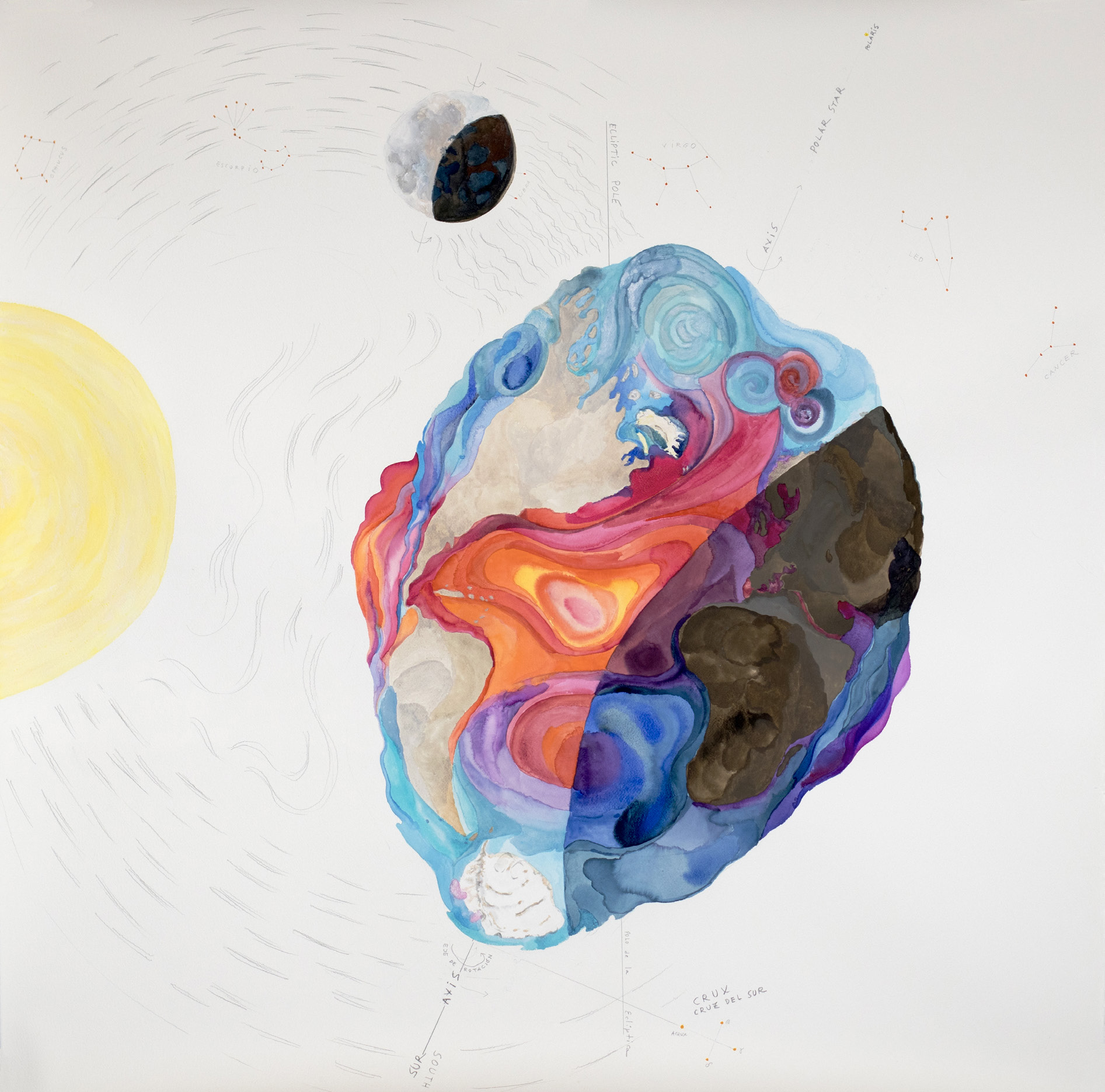
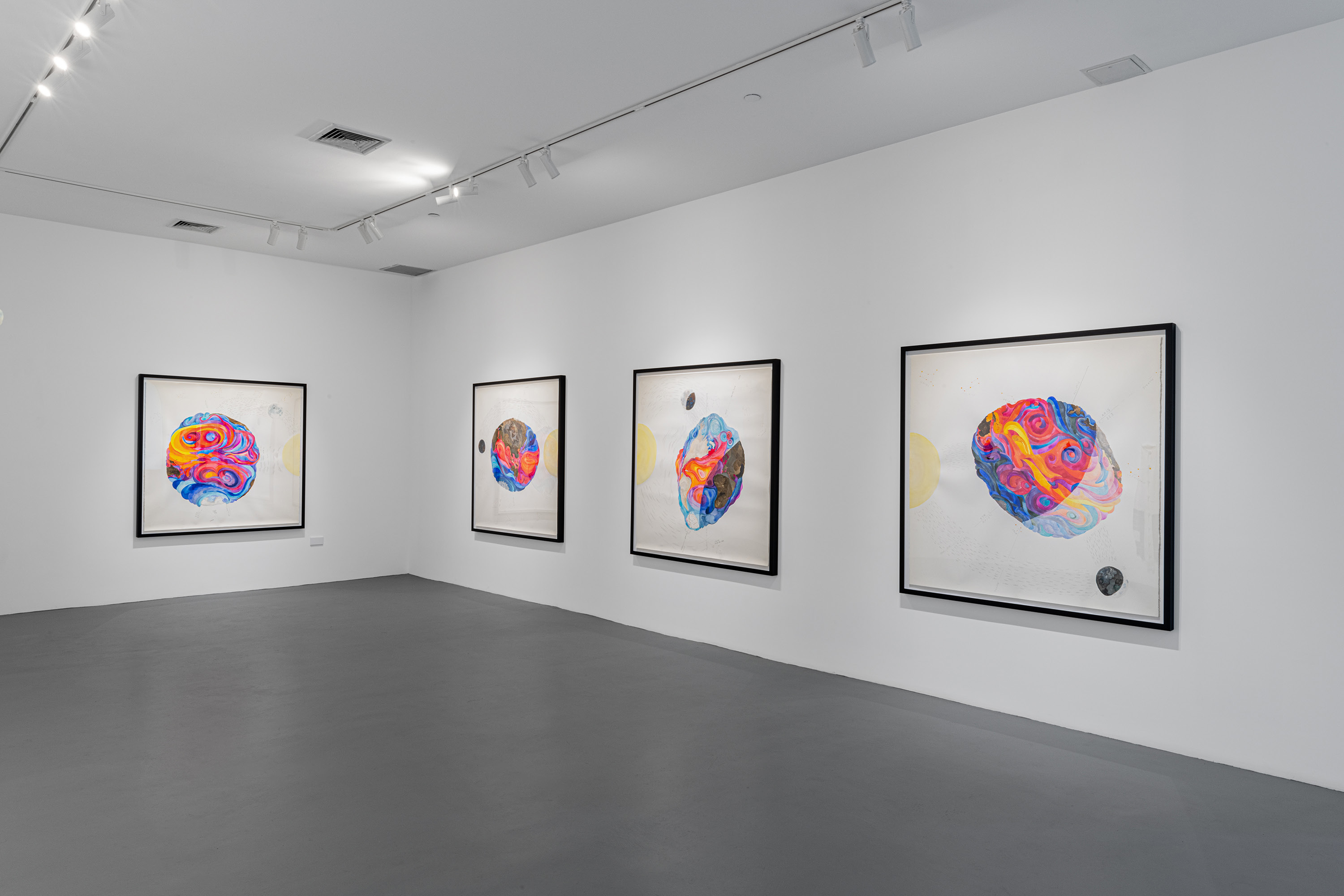
(SK): In Mónica Giron’s work titled Waterpockets, we observe a watercolor technique characterized by varied brushstrokes and gestures, underscoring its manual and expressive nature. This piece merges human emotional representations with scientific images of the planet. Giron adopts a digital perspective, akin to a computer image from a satellite viewpoint, to capture subtle details of the planet, including temperature measurements and ocean locations, using satellite technology. This blend of human perception, artistic sensitivity, and technological elements reflects an artist’s contemplation on the technological and scientific representation of the world.
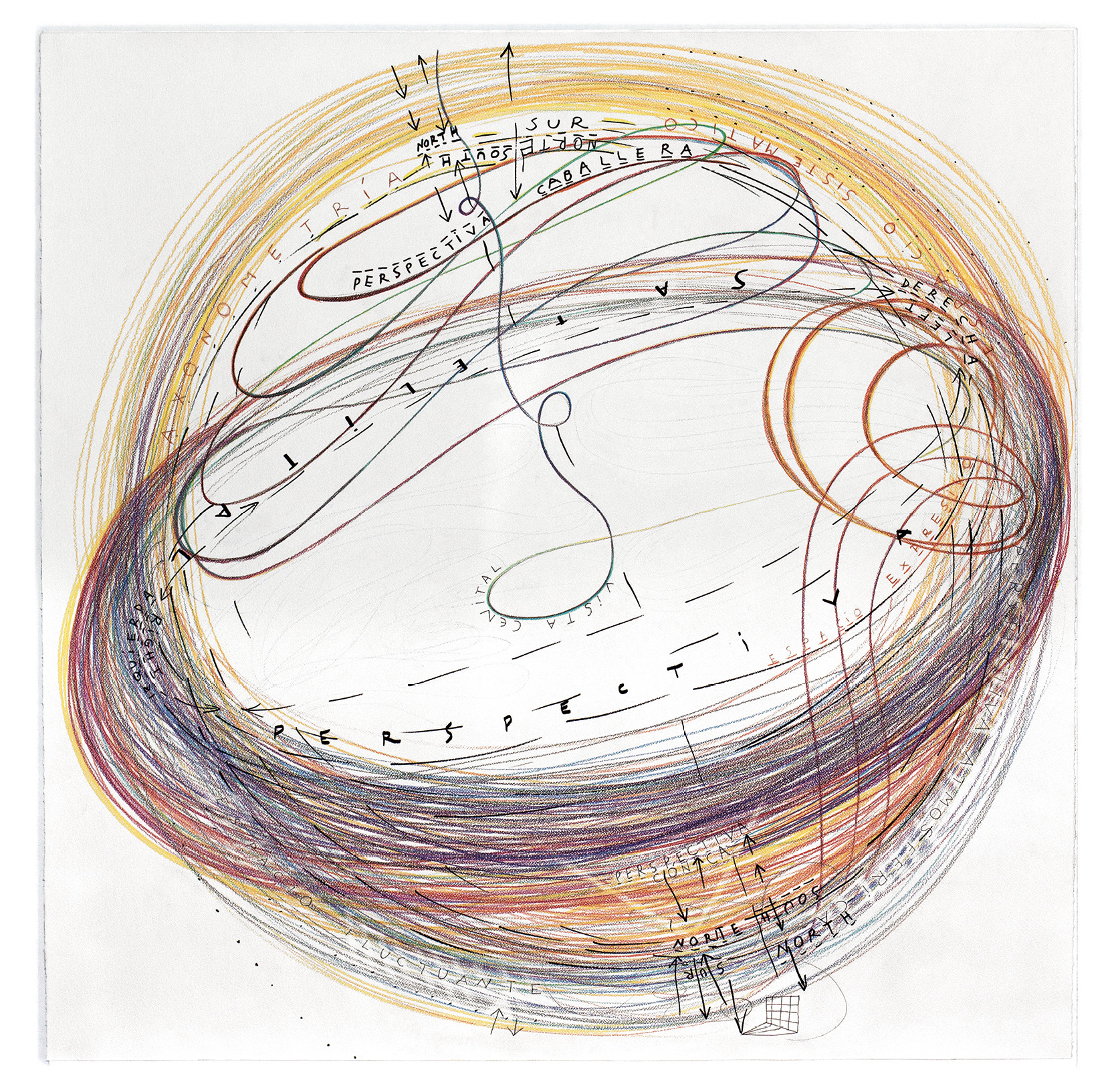
The drawing Satellite Perspective, located in the back room, further highlights these subtle details. In the Waterpockets series, Giron showcases a duality: the use of a purely manual technique juxtaposed with the integration of digital elements for a more comprehensive and detailed representation of the planet. This combination offers a unique perspective on how human perception and technology can intertwine to create a deeper and more complex representation of the world.
Giron explores aspects like ocean currents and Earth’s temperatures, using the internet as a research tool. Her process involves a deep dive into digital data, encompassing texts, statistics, scientific and popular communications, videos, and live digital simulations about natural phenomena such as ocean currents, winds, and planetary movements. The Waterpockets series transcends the human, offering a broader, planetary view. In these works, Earth, constantly recreated by society, becomes a model for study.
Giron, in her research, examines how cultural models accumulate and their contours become ambiguous. Ultimately, her artwork emerges as a process that acquires its own meaning. Through these techniques, she aims to better understand the planet’s climatic patterns and water movements, immersing herself in a vast ocean of digital data available on the internet. This fusion of art, science, and technology is uniquely manifested in the use of pencil and watercolor, creating a distinctive outcome in her work.
(NG): Mónica, with her Swiss and Argentine heritage, grew up in Patagonia within a Swiss family known for their emphasis on technique, technology, and precision. These cultural traits are evident in her life and work. She’s known for her meticulousness, exemplified by her habits of tidiness and improving environments she inhabits. Monica incorporates diverse influences in her work, such as Feng Shui and systemic therapy, integrating these with technology and imaging.
However, unlike her contemporaries, she distances herself from Marxism and psychoanalysis. This deliberate avoidance of two dominant cultural theories in her generation and the influence of Adam Olczyk’s ideas make her approach to art unique, particularly in a culture heavily influenced by these ideologies.
(SK): It’s nearly impossible.
(NG): Exactly, to do that is nearly impossible in that culture, and there is never something pointing in that direction within her work.
(NG): In discussing satellite imagery and planets, I noticed something intriguing when I first entered here. Instead of seeing Earth, my mind saw images of brains. This observation led me to think about MRI scans, where different brain regions light up in specific colors depending on their activity. This scientific imaging, fascinated with active brain parts showing up in vibrant colors, contrasts starkly with climate change topics. It’s akin to the profound shift in perception that might happen when experiencing something like marijuana for the first time as a teenager – everything familiar suddenly gains a new meaning. This divergence in interpretation challenges our grasp of reality. Relating this to your paper, it poses interesting questions about technology, such as satellite imagery, and our interaction with it.
(SK): Like the technology of perception?
(NG): Precisely. It’s also about considering whether technology, especially something like artificial intelligence, can possess autonomy. Mónica seems to view technology primarily as a practical tool. She appears to ask herself what the most rapid and efficient method is to achieve her objective, often finding her answer in technology. Surprisingly, the end product is remarkably poetic, which is something I find quite baffling and intriguing in its transformation from a functional approach to an artistic outcome.
(SK): Your interpretation indeed provides a deep understanding of how technology, natural elements, and artistic expression intertwine. The artist’s emotional landscape is portrayed as both singular and multifaceted, revealing the depth and complexity of her character. Her approach is conceptual and composed, yet it uncovers a sensitivity that is intricately intertwined with her analytical, technical, and instrumental mindset, reminiscent of archaeological discoveries.
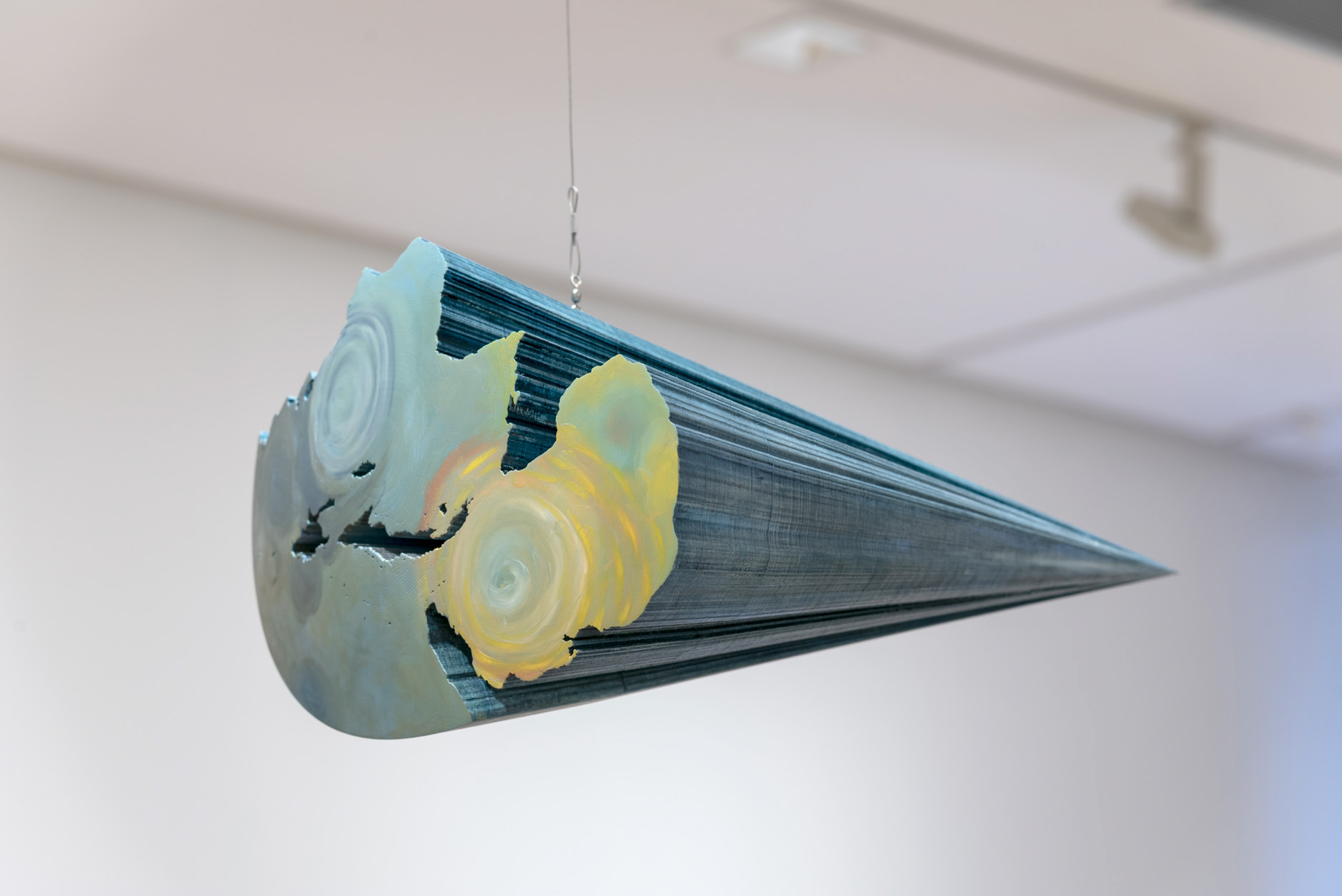
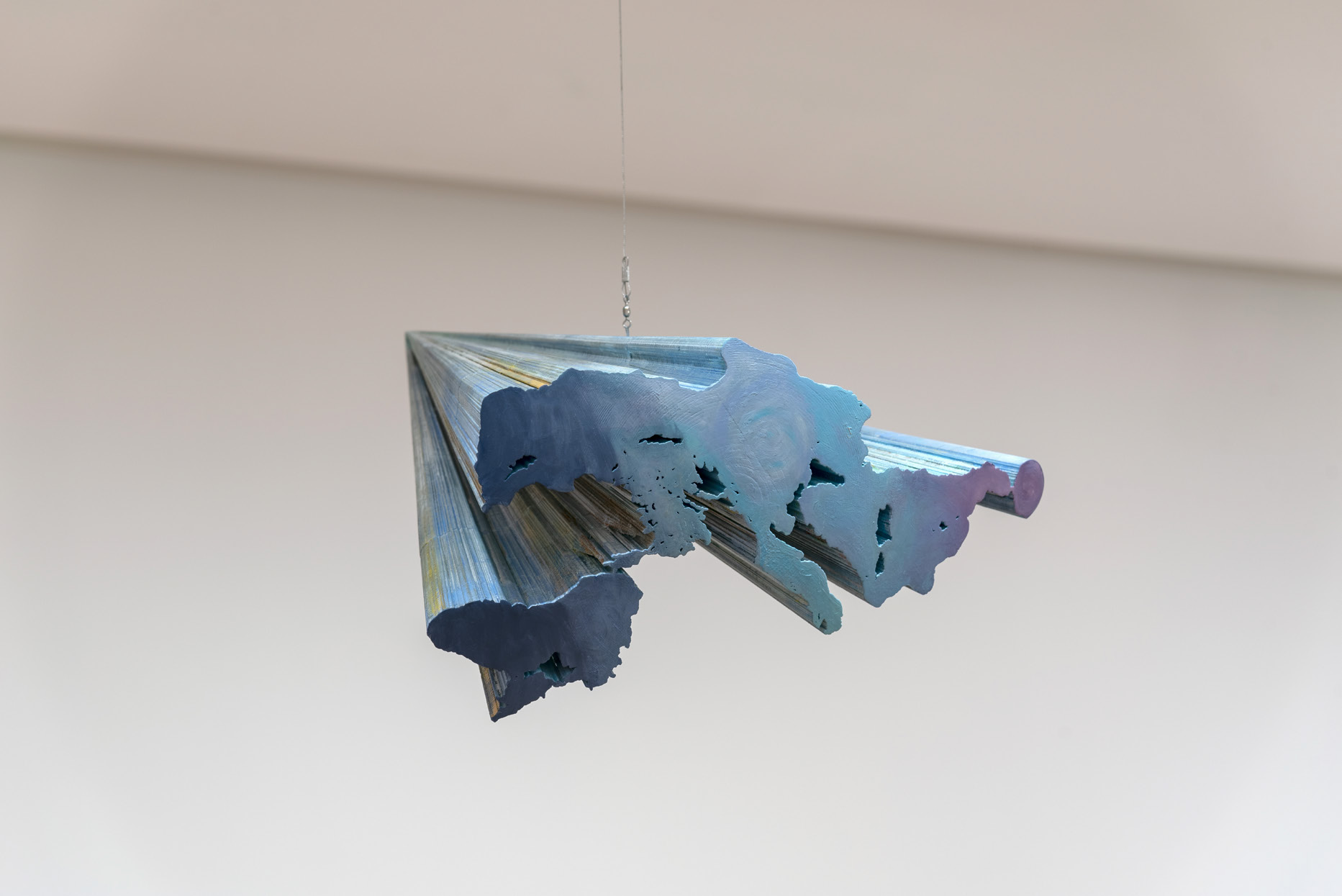
The ongoing project Ajuar para un conquistador’ (Trousseau for a Conqueror, 1993-ongoing) intriguingly relates to the sculptures Amanecer con violetas (Lilac Sunrise) and Atardecer dorado (Golden Sunset). Despite being created using different media and spanning different eras, they share a thematic connection. The Ajuar para un conquistador project, comprising pullovers, socks, gloves, and scarves for Patagonian birds, made from merino wool and buttons, complements the sculptures. These, crafted with oil on polylactic acid (PLA) and through 3D printing, embody a connected poetics.
The incorporation of birds highlights the element of air, represented by their journey to Patagonia. This contrasts with the sculptures, which, though floating, depict oceanic fragments with spaces indicating the absence of land, thus symbolizing the elements of earth, water, and air. The interplay of these elements, the shapes of the sculptures, and the birds’ flight patterns relate to the exhibition’s central theme: the concept of a vortex. Birds fly in formation for two main reasons: to conserve energy by utilizing the upwash vortex fields created by the leading birds, and to facilitate orientation and communication within the group. The sculptures, with their vortex-like form, parallel natural phenomena such as whirlpools and rotating ocean currents, large eddies caused by tidal interactions. These currents, particularly those with a central downdraft, are termed vortexes and are prevalent in areas where coastal and seabed configurations form deep, narrow channels.
The Elemental Vortex drawing, merging water and air vortexes, further underscores this concept. It portrays a vortex imbued with elemental power, evocative of cosmic creation events like the Big Bang and black holes, symbolizing the formation of the universe. The migratory patterns of birds, resembling the dynamics of a vortex, provide insight into the artist’s worldview. This artistic exploration suggests a profound synergy between natural phenomena, artistic expression, and philosophical thought, offering a comprehensive understanding of the artist’s interpretation of the world and her role within it.
(NG): I mean, it’s worth noting that these ideas are clearly not scientific. We know that seas don’t extend all the way to the center of the earth; they primarily occupy the surface. Beneath that, there are layers of rocks, more rocks, and eventually, you reach the magma layer.
(SK): But it’s what she extracted - as if she were extracting the eye of the earth. She left the water, and the water is like a digital image. And from that digital image, a fragment of the ocean, she reduced it to a point. That is the same image from another point: it is reduced to the smallest point creating the image of a vortex. And it’s not scientific, it’s poetic, or the poetics of the molecular. That is, these two opposing tendencies between art and science make their uniqueness.
(NG): But the other aspect I was pondering is Patagonia. She actually grew up there, in a region that’s largely an immense wilderness, one of the rare places on Earth still untouched by pollution. Recently, it has turned into a sort of financial battleground due to potential lithium deposits. Moreover, there’s the dark history of an indigenous population wiped out in the 19th century during the so-called ‘conquest of the desert’, which, ironically, was neither a conquest nor a desert.
Patagonia, with its pristine nature, holds a significant place in the imaginative minds of the world’s tech elite. It seems like every Silicon Valley mogul or AI tycoon is eager to acquire land there, creating a refuge for the hypothetical scenario of an atomic disaster. It’s like a fantasy of a post-apocalyptic sanctuary, a place that promises a safe future, which I find highly doubtful. This notion forms another layer in our work, rooted in the experience of growing up in such a unique place. As history evolves, adding layers to the complexity of the world, Patagonia maintains its essence. So, the question arises: how does this complexity play into our work?
It’s not about making a critical statement or assessment. The work doesn’t have infinite entry points; rather, it has multiple, but not limitless, entry and exit points. I examine each piece and contemplate the possibilities they present. How she has managed this for so many years is beyond me. Another challenging aspect of her artistry is how she integrates three pieces with different materials, from different eras, and with varied approaches, yet somehow, it all harmonizes seamlessly.
(AG): Certainly, I’d like to comment on that. I believe one of the most remarkable aspects of Mónica Giron as an artist is her ability to address themes like environmental concerns and colonialism without being confined to the conventional methods I’ve mentioned. She skillfully integrates traditional techniques, such as knitting, which is a rather antique form of technology. Simultaneously, she embraces forward-thinking technological approaches, such as 3D printing. Additionally, she incorporates watercolor into her repertoire. This diverse range of mediums underscores her versatility and capacity to explore complex themes through both time-honored and contemporary artistic practices.
(NG): Every piece of her work seems to be the culmination of a lifetime of perfecting her craft. Each technique she employs could stand alone as a distinct artistic career. For instance, she could be renowned solely as a knitting artist or a 3D printing artist. Trying techniques like watercolors at home, you quickly realize the challenge; not every attempt is successful, unlike her seemingly effortless proficiency. Once she conceptualizes an idea, the conceptual phase is complete; she then documents her thoughts and begins her artistic process. It’s fascinating to consider her failure rate, given the evident skill and creativity in her diverse body of work.
(SK): Actually, this aspect is quite problematic.
(NG): Her work emerges fully realized. There’s never a visible process or developmental phases; everything appears impeccably finished.
Vivi Tellas (VT): I wonder if she works through failure?
(NG): On failure itself? That’s the open question I wanted to raise. How many drafts are discarded? Maybe none.
(SK): She seems more liberated when using a pencil. Her drawings perhaps reveal more of her core as an artist.
(NG): Yes, she’s had medical training, in realistic drawing and still life. You could say that her work represents the failure to direct meaning. It’s precise yet anti-authoritarian, never dictating its meaning. It’s undeniable that the meaning is there, but it’s never imposed on the viewer.
(NG): As an artist, you must have experienced this too. Some of your work might not have turned out as intended.
(VT): I’d say most of it. It’s a state of failure, like what you’re discussing. It’s unclear where the ‘discharge’ is. Being a trained artist, she might be tired of conventional success and embraces failure, resulting in remarkable work done with great freedom.
(NG): Exactly, as an artist, you never achieve exactly what you initially envision. By ‘failure rate,’ I mean the work that ends up discarded. It raises an interesting question: what is her rate of failure, if any?
(SK): She embodies a 20th-century contradiction: she’s very formalistic. At times, her work appears purely formalistic, yet it’s also contextual. Looking from outside, you might see brains; she’s conveying things unrelated to art, like nature.
(NG): It’s like an analytical system, provoking thoughts about what’s not present. The work isn’t autonomous. It’s not like looking at a Rothko. The information in her color work isn’t fully contained within the work itself.
(SK): Yet, at the same time, one could abstract the nature of the earth and focus solely on the colors. Now, when I see the brain, it’s also in my mind, consciousness is present.
(NG): I’m confident we could delve into the id, the ego, and all that. That’s what I mean. She’s an artist who’s received critical acclaim for 25 years, with theories that come and go. Theoretical trends appear and disappear, and they always seem to fit her work. These texts are insightful, written by skilled authors, but they don’t completely define her art.
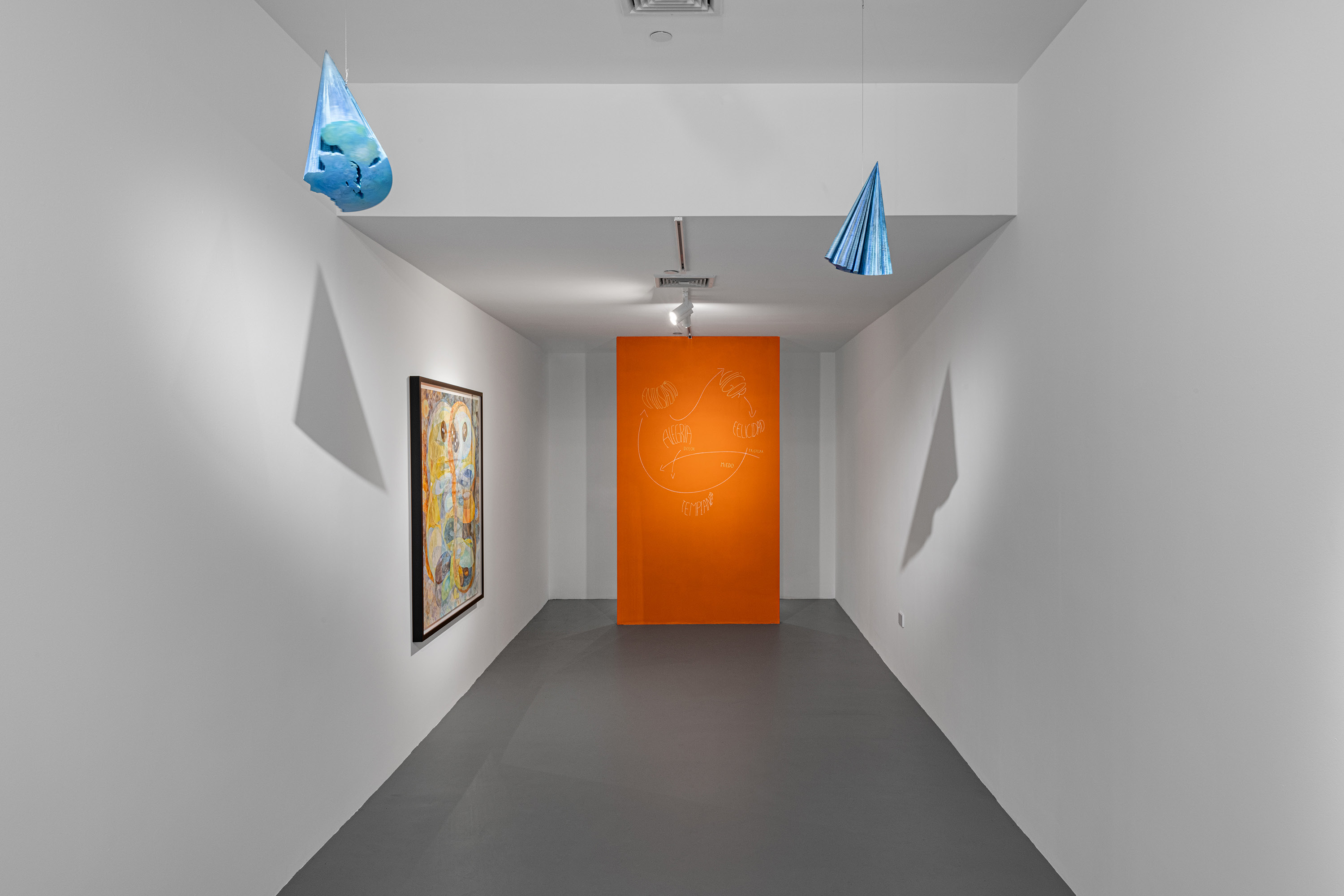
(AG): Her interest in Taoism might also play a role. She discusses it in her drawings, like the one on the orange wall in the other room. It’s much about emotions, change, and the perpetual state of flux. She seems genuinely interested in changes, both in the norm and her comfort zone. I believe this philosophy influences her tendency to explore from various angles.
(NG): You know, when someone sits down and says, ‘My new body of work will be about Taoism,’ or ‘I’ll use scientific imagery and 3D printing,’ it often sounds like a recipe for disaster. It can lead to pseudo-Orientalism, something incomprehensible without actual life experience. Eastern philosophies often need practical engagement to be understood. I’m not claiming to be a Taoist scholar, but if a student proposed this to me, I’d be skeptical. Mónica, however, manages to pull it off consistently.
(VT): So, are you suggesting she approaches her work with a ‘work on whatever’ attitude?
(NG): Not at all. She engages with disciplines in a serious, systematic way. She doesn’t just skim through a Taoist book. She must have studied the original texts, consulted scholars, and immersed herself in these studies over years. It’s not a linear process of idea followed by work. These are complex bodies of knowledge that she navigates, which is quite challenging. Think about how many are using 3D printing now; there’s a lot of mediocre output. But Monica stands out.
(SK): Like with NFTs.
(NG): Exactly. By the end of this talk, 3D printing will be buzzing across New York City. I have immense respect for her approach.
Audience: I don’t really perceive nature in her work.
(SK): You don’t see nature? What do you see instead?
Audience: More like the brain, or the world as a brain.
(NG): Absolutely, the brain is a fundamental part of the natural world!
(SK): When discussing landscape or nature in her work, we’re considering the elemental forces like water, air, fire, and earth, all of which she incorporates.
Audience: Yet, it doesn’t quite resemble a traditional depiction of nature, like a simple painting of a wave. It’s almost metallic, reminiscent of the earth’s core. And then there’s something that evokes flames or lava. The way things are depicted, in a chemical sense, mirrors the flow of water or lava. It’s technical, yet it also resembles brains.
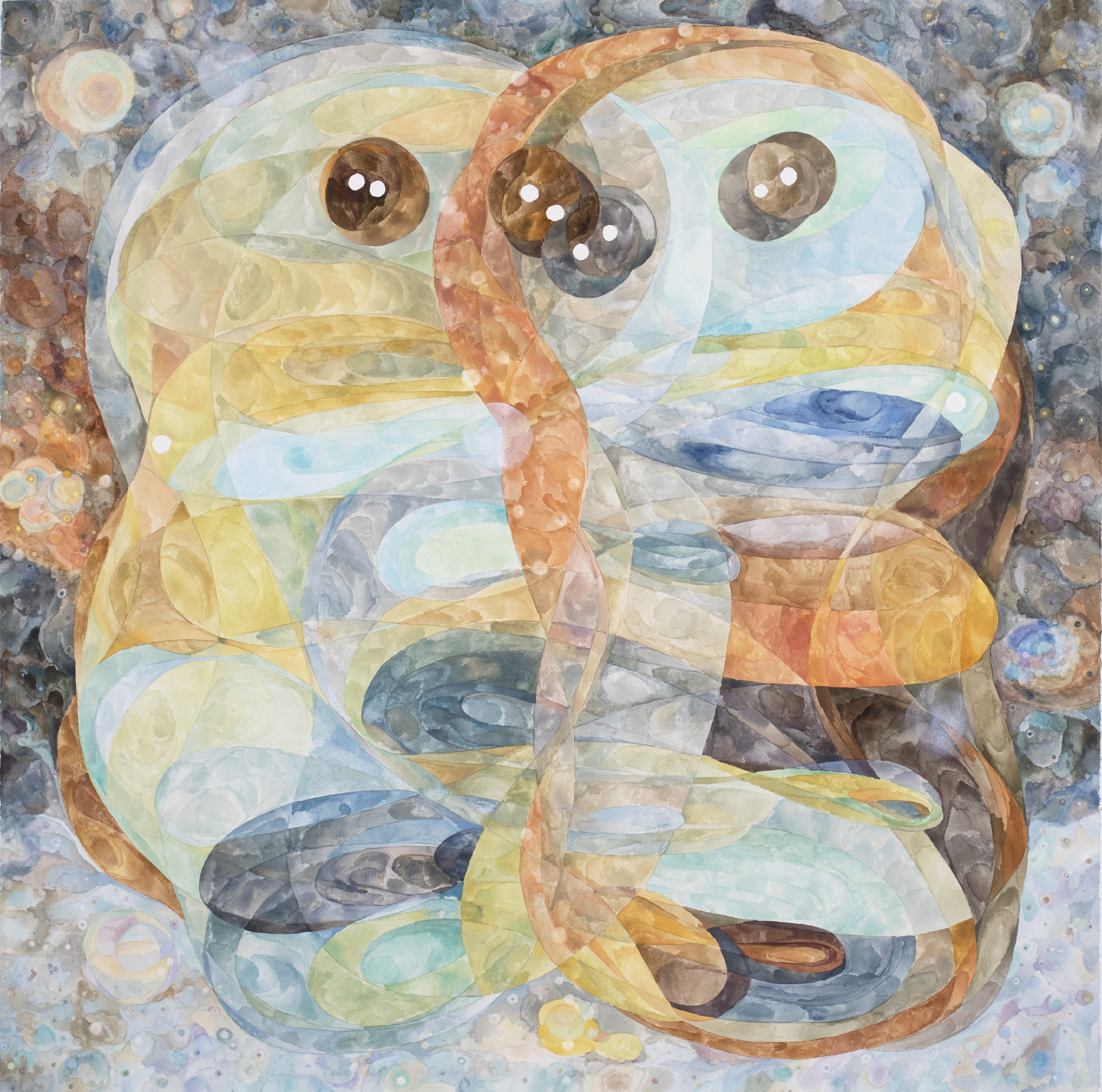
(NG): I understand what you mean. It’s fascinating how an hour ago, this seemed like a brain to you. I can see two eyes clearly, a semblance of a mouth, and perhaps something akin to a serpent’s head.
(SK): Looking at these watercolors, and then considering the series in the other room, there are recurring patterns - these circles. The patterns in these watercolors are echoed in the drawings in the other room, referred to as SX. There’s a particular quality to these watercolors.
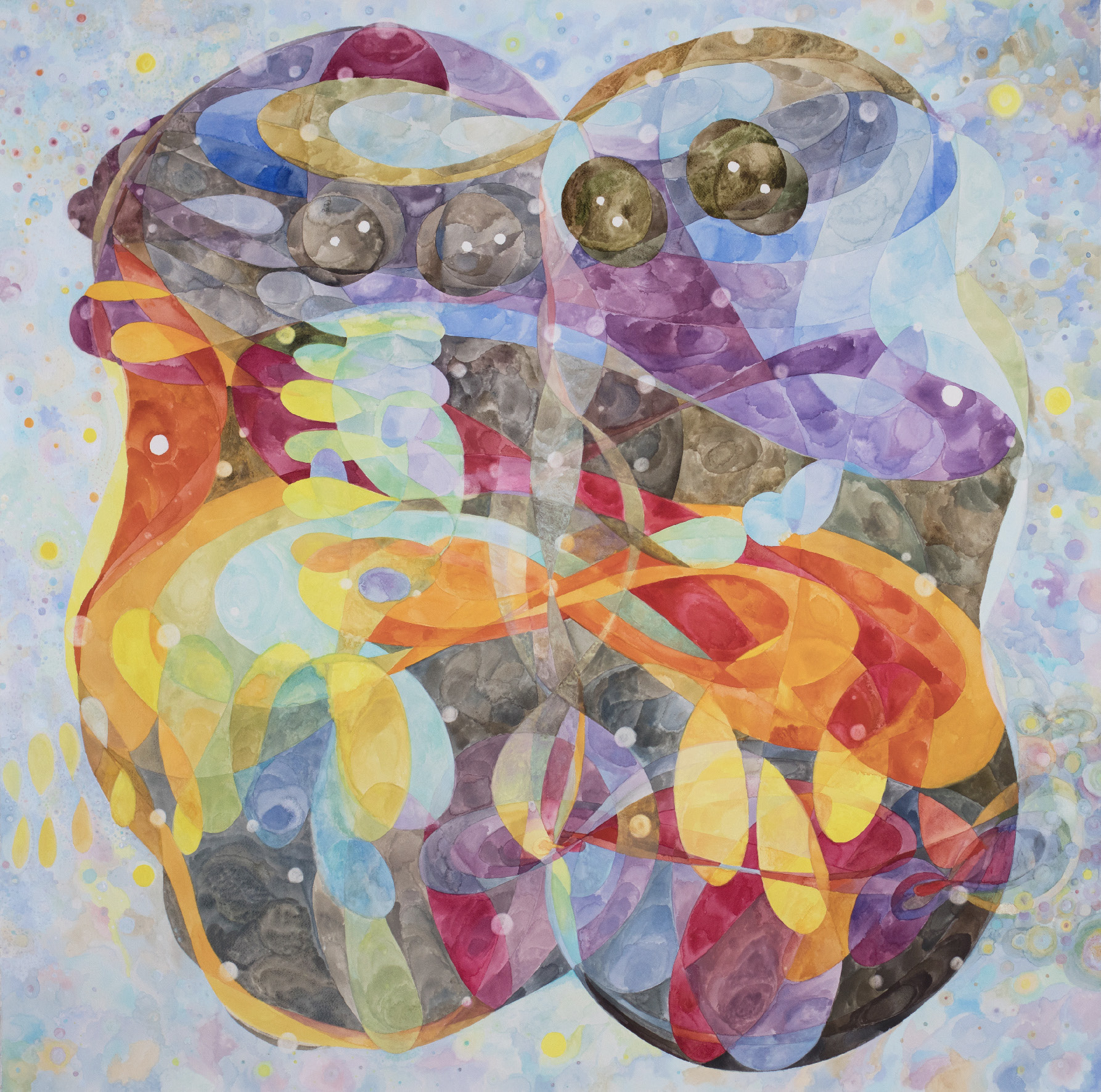
In Argentina, when we look at painters, I can discern similarities – in the other room, for example, you mention Benedict, and I see influences of Xul Solar, particularly in the transparency, and maybe a bit of Raquel Forner.
Audience: The contrast between material and theme in her work is fascinating, like using watercolors for earth, or depicting water on concrete objects.
(NG): Are there any questions, or is everything clear so far?
Audience: Initially, you spoke about the poetry in art and the impossibility of deviation. I’m curious to see how this concept manifests physically in her work.
(NG): Well, one way to look at it is dialectically. When discussing poetry and art, we might ask, what is something that isn’t poetic? Is it the poetic nature of art or its specific function? For years, we’ve been trying to determine art’s role, pondering whether it can truly change the world. I’ve never seen a person fully transformed by an artwork in terms of social justice. Does art bring social justice by amplifying minority voices? It might not bring sweeping social change but perhaps benefits a few collectors and artists. Can art halt climate change? Unlikely. But can it draw attention to its impacts? Possibly. The poetics of art is a space that no other human activity can fill. Why do we engage with it, talk about it, buy it, sell it, or visit museums? Art, especially since the modern era, transcends functional utility.
Julio Grinblatt (JG): It’s not entirely impossible for art to effect change. There are instances where art has played a role, suggesting its potential influence.
(NG): I’m not denying art’s political or societal contributions, but such cases are rare. When art does influence society, it raises questions about the mass appeal of the art and its quality. Picasso’s Guernica is a classic example. It didn’t stop the Spanish Civil War, but its impact is undeniable. There’s this anecdote about Picasso in France during the war – its accuracy is uncertain, but it’s intriguing. When the Gestapo, aware of his Communist Party affiliation, saw Guernica and asked if he did it, Picasso reportedly said, “No, you did.”
(SK): Political change is gradual, and art’s impact may not be immediate. The Renaissance, for instance, introduced new technologies and perspectives through a series of artworks.
(NG): What I mean is that true art possesses an element beyond a defined function. Its undefinable component is what makes it significant.
(SK): Mónica’s work, like Global Warming, presents major themes but also allows for diverse interpretations. It opens multiple doors, inviting different perspectives.
(VT): I believe art can change the world.
(NG): This is an age-old debate. Art contributes to societal shifts but rarely instigates them directly. It’s more about convergence with societal readiness to address issues. For instance, while cubism changed our perception, it coincided with scientific developments like relativity. Art’s function is hard to define, yet its absence in oppressive regimes highlights its importance. Artistic expression is vital for societal health and progress.
(VT): Art’s impact is often inexplicable.
(NG): Exactly. The poetics or the essence of art is elusive. It’s not just about lacking a function; it’s about existing on a spectrum where functionality diminishes in comparison to the undefinable.
(SK): Mónica uses metaphor to describe objects in a non-literal way, enhancing our understanding. Her work represents objects in an essential form, encouraging us to appreciate them beyond literal interpretation.
(NG): Art is a diverse linguistic circle. Simple pictograms can represent complex ideas. For instance, a line and a circle might symbolize dawn or dusk, depending on the context. This linguistic aspect is fundamental to understanding art.
Audience: The variety of interpretations in art grows with the diversity of its audience. Different cultural backgrounds lead to unique understandings and meanings.
(NG): As an artist, it’s challenging to create work that resonates on multiple levels and speaks to diverse experiences.
(SK): Mónica’s approach to displaying her artwork resembles an installation, composed of various pieces, each telling part of a broader story.
(AG): She was also an influential art teacher, shaping the practices of other notable artists represented in this gallery.
(SK): Gabriel Chaile, for example, was one of her students.
(NG): It would be enlightening to interview those she taught about her teaching methods and their impact.
(SK): Over the past fifteen years, she has been a pivotal figure in Argentinian art education, contributing significantly to its development.
(NG): She’s taught in various formats, influencing a wide range of artists and students. Understanding her teaching approach would be valuable.
(AG): Her background is intriguing. Her family moved from Switzerland to Patagonia due to her father’s medical work, which undoubtedly influenced her scientific perspective.
(SK): When she chose to become an artist, her father questioned the practicality of art, essentially asking about its function.
(NG): That’s exactly it – questioning the function of art.
(SK): If you misinterpret her work as astrological when it’s astronomical, you miss the essence. Her work invites us to explore themes like constellations and space exploration.
(NG): Any further questions or ideas to explore?
(AG): Continuing on astronomy and astrology, Mónica views them as intertwined. The constellations we associate with astrology were used by ancient peoples to navigate and understand their place in the world.
(SK): Seeing patterns in the stars is a product of imagination. Let’s continue our discussion over wine and cheese.
About the participants
Biographical notes reproduced from the original publication. Institutional roles refer to the time of the conversation.
NICOLÁS GUAGNINI was born in Buenos Aires in 1966. He is an artist, writer, and co-founder of Orchard Gallery, New York, and the film collective Union Gaucha Productions. Guagnini’s work has been the subject of international solo exhibitions at venues including Artists Space, New York; FRAC Grand Large Hauts-de- France, Dunkirk; and Museo d’Arte Contemporanea di Roma. His work has been presented in numerous group exhibitions, most recently at 80WSE, New York; the Drawing Center, New York; and Museo de Arte Latinoamericano de Buenos Aires. Guagnini lives in New York.
SYD KROCHMALNY is a multidisciplinary artist, writer, researcher, curator, musician, and Professor of Arts, Literature, and Sociology. He completed his Postdoctoral Studies at Columbia University in New York City, and holds a Ph.D. in Social Sciences, a master’s degree in Communication and Culture, and a bachelor’s degree in Sociology from the University of Buenos Aires. Krochmalny’s multimedia work has been exhibited at the Reina Sofia Museum, Harvard University, David Rockefeller Center, the MALBA, the Americas Society, Cultural Center of Memory Haroldo Conti, Remembrance Park, University of Oslo, Universidade Federal do Rio de Janeiro, MAC de Niteroi, Pinacoteca San Pablo, The University of Edinburgh, Museum of Contemporary Art in Buenos Aires, among others. Krochmalny has published several books, including “Journals of Hate” (2016), “Weak” (2017), “The Dreams” (2018), “The Size of My World” (2021), and “Ramona, Debates in the Art on the Edge of the Millennium” (2021). He has also written a prologue for “Crypto Currency and Sovereignty” (2022) and has been involved in magazine projects such as editor of Ramona, co-founder and editor of Jennifer Magazine, and co-founder and editor of the CIA magazine (Center for Artistic Research). Krochmalny has received a fellowships by the Argentinian Research Council CONICET, and has served as a Professor and Researcher at various institutions including the Gino Germani Institute and the Institute of the Theory and History of Art Julio Payró at the University of Buenos Aires, The Latin American Council of Social Sciences (CLACSO), and the University of Avellaneda. Krochmalny has delivered lectures at universities such as Harvard University, Columbia University, New York University, Rutgers University, University of Oslo, Edinburgh University, Stirling University, and the Americas Society. In Buenos Aires, Krochmalny has played a vital role in the art education culture as a contributor to the Center for Artistic Research (CIA), nurturing many of Argentina’s most prominent artists.