An interview with Ceci Closa about her recent publication Publicaciones que me gustaron.
—
Jennifer: What is your relationship with the internet like these days, during mandatory social isolation?
Cecilia Closa: I live half in my apartment, half on the internet. I use it to work and meet thousands of needs. Seeing the people I miss through a screen saves me and destroys me. Every so often, I try not to turn on the computer all day so I can be less distracted from my body.
J: Aww and … what do you think of Instagram? Is it just an ocean of selfies feeding on ego and anxiety, or is there something lovely about it that's worthwhile?
CC: I don't get that many selfies—an ocean's worth!—in my feed. I mostly see flyers, memes, artworks, and pictures of extraordinary things. What I find worthwhile is the real-time record of what the images we're producing for others to see are like, even though what reaches us from that record is skewed by what the algorithms decide to show each person, according to some market need, or a political one, or who knows what.
J: that sounds interesting, though I'm a little scared the algorithms might be evil. What do you think about books? Why do they resist disappearing? Isn't it strange to spend hours looking at a white page with little letters and pictures?
CC: As strange as breathing, or as the illusion of normality. To me, books are among the most incredible objects in existence. They contain a great deal of thought in very little physical space, they keep very well in this atmosphere, and they generally live longer than people. That means we can take any book from a library and perhaps read something someone wrote 280 years ago, while they were alive. In that respect, we still have no idea what will happen to .epub files.
J: what a lovely thing to say. I feel it helps me understand them better. I love those concerns about matter and time … and what you're saying about books is wonderful. I imagine them downloading all those compressed ideas into the cultural matrix so they can reproduce their own realities through people…. Wait! You recently published a book about things that happen on the internet … it's good to know they'll be safe for at least 280 years! Could you tell me a little more about your publication?
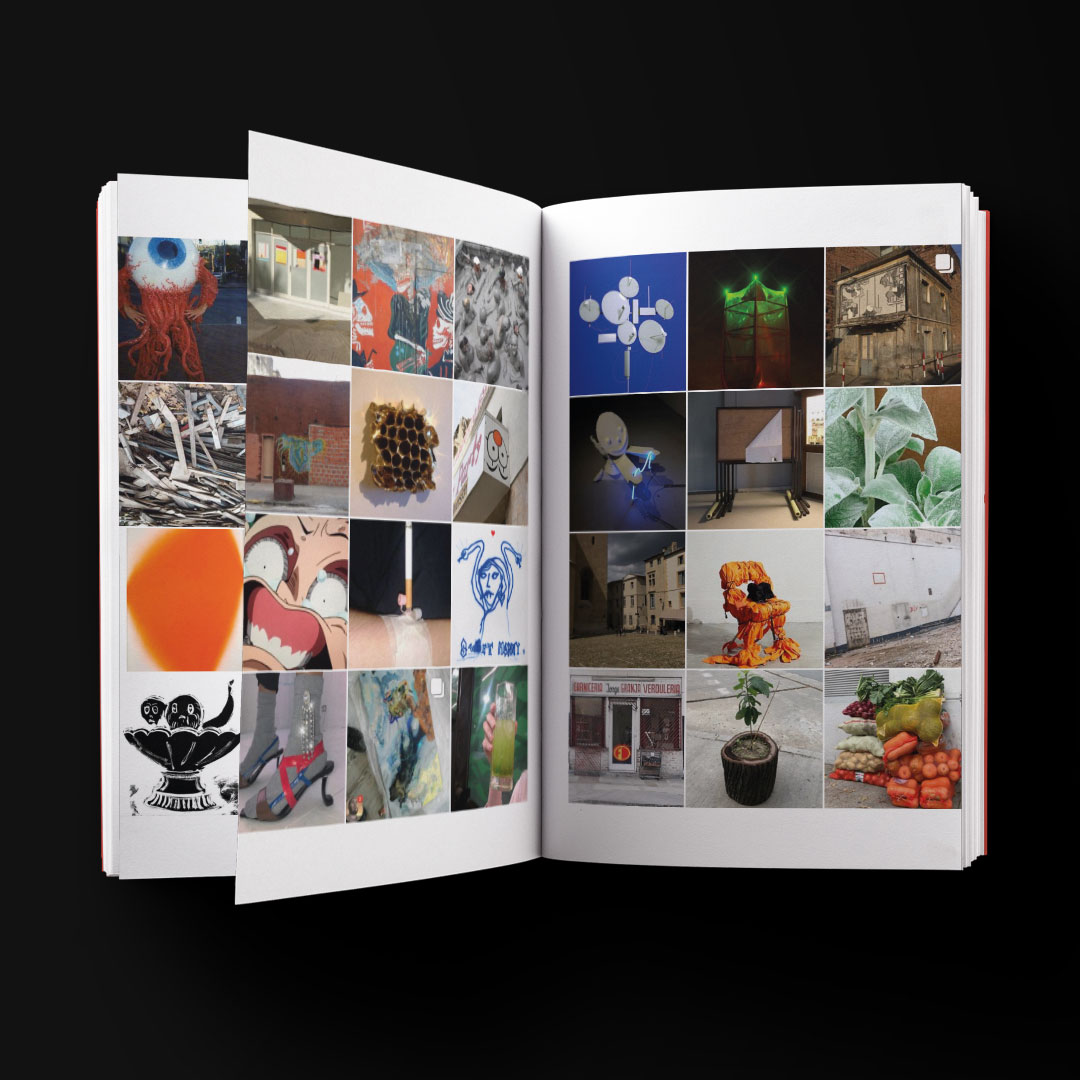
CC: Yes. It's an edition of the screenshots I've taken over the past three years of posts I liked on Instagram. These screenshots are grids of square images that form on their own as I like things, and I'm struck by finding all kinds of patterns and coincidences in them (one page happens to contain three images of breastfeeding). In part, they interest me as a reflection of my aesthetic judgment through that of the people I follow, who in turn make their own aesthetic decisions for the social network. Another thing is that the screenshots aren't in sequential order. I like to think this book can be used or worn out in any way, opened to any page and looked at for a minute a day, used to play at finding yourself, hallucinate an I Ching, and things like that.
J: Let's try a little exercise in speculation … if you were the internet and had access to all that information people produce, how do you think you'd feel? What would you think of people?
CC as the internet: 01010001 01110101 01100101 00100000 01110011 01101111 01101101 01101111 01110011 00100000 01110100 01100101 01110010 01110010 01101111 01110010 11101101 01100110 01101001 01100011 01101111 01110011 00100000 01111001 00100000 01101101 01110101 01111001 00100000 01101010 01110101 01100111 01101111 01110011 01101111 01110011
—
Publicaciones que me gustaron
96 pages
13.4 × 18.6 cm