
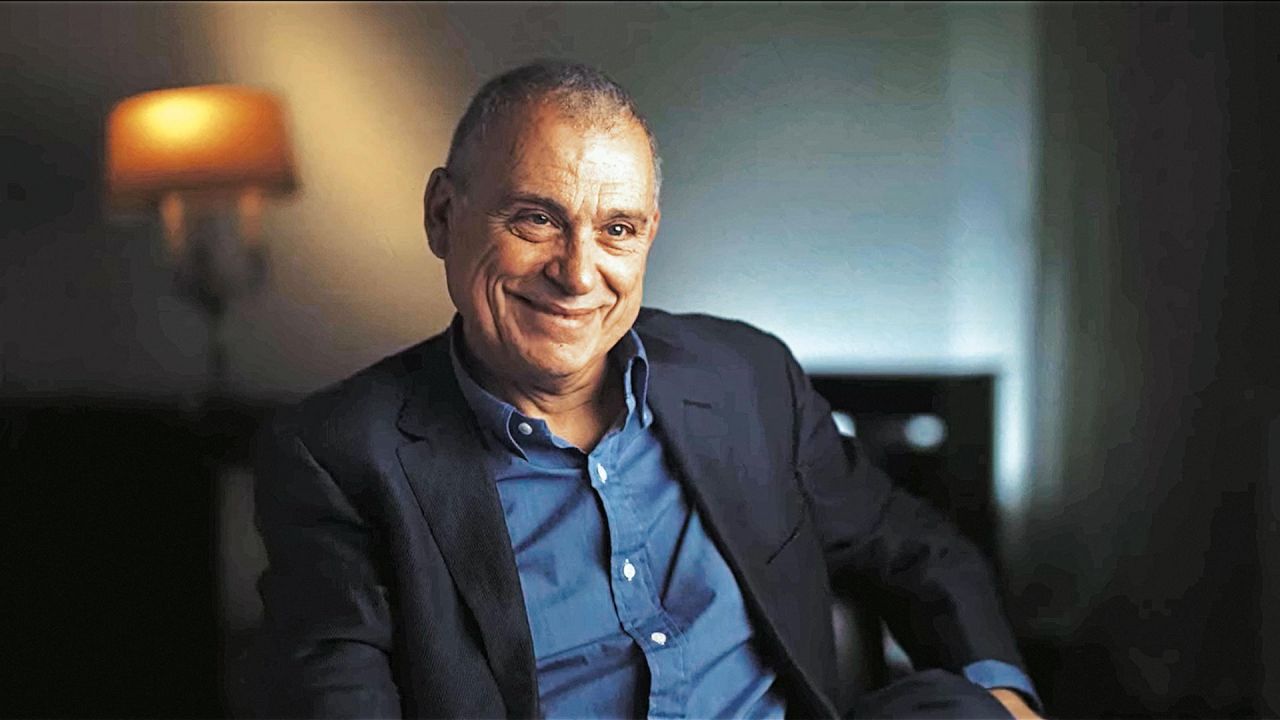
Following the award of the PETER MARZIO 2020 student prize(1) to doctoral student Rodrigo Cañete,(2) the vast majority of Argentina’s artistic community, both individually and institutionally, voiced its condemnation and demanded that the authorities of the International Center for the Arts of the Americas at the Museum of Fine Arts, Houston (ICAA/MFAH) rescind it.
Mari Carmen Ramírez, the museum’s curator of Latin American art, maintained that the award was revoked not because of the academic qualities of the submitted paper, but because of other kinds of writing that Mr. Cañete publishes daily on his blog.
Since 2012, Rodrigo Cañete has run the blog Love Art Not People, where he daily spews gossip laden with slander and abuse about the private and social lives of people in Buenos Aires’s artistic community. There is less discussion of artworks than of their makers, and there seems to be less love of art than hatred for members of that community. From this public platform, Mr. Cañete engages in systematic bullying and sustained harassment, symbolic violence and rampant discrimination.
None of this is news. What is new is that both the museum’s statement and the various statements of condemnation make clear that they are passing judgment not on his paper but on his antisocial conduct. As though his academic quality could not be questioned.
We disagree. Here we will address the quality of the prizewinning text, which we accessed as a PDF and which was published in Jennifer.
As in all his critical interventions, Cañete builds this paper on erratic arguments with a pseudosociological-political tone. If an artist is unsuccessful, Mr. Cañete considers them a loser; if the artist gains recognition, they become an establishment sellout. He constantly floats unsubstantiated hypotheses about the relationship between an artist-critic-curator’s social origins, ethnic coloring, or individual psychology in order to denigrate their work. His aesthetic criteria tend to be elementary classifications: it is either pop, camp, kitsch, or conceptual. Banal exercises in resemblance to this or that Argentine or international artist—like children’s games of spotting similarities and differences between two pictures. He uses these categories both for and against the person being judged. The Cañete doctrine is a negative example of what art criticism ought to be.
To build a bridge of empathy with a segment of his readers, he spreads a conspiracy theory. All artists, curators, critics, museum directors, and so on are supposedly colluding to make or destroy reputations and to grant or deny admission to what he calls the elite. This is an old technique for increasing hostility within a given population in order to win the sympathy of those who feel excluded from the art scene. In this way, without presenting evidence, he characterizes the entire art world as a corrupt mafia. The tactic incites outsiders to an ideological lynching of supposed insiders. Mr. Cañete maintains that everyone included in the elite helps everyone else, gives one another prizes, and sells to one another. This narrative is structurally similar to that of antisemitism.
Nothing in his arguments goes beyond the unpunished stigmatization of the objects of his hatred. As a hater, he can defame someone for being homosexual or heterosexual, a top or a bottom, for having relationships with older or younger people, for being prosperous or destitute, a man or a woman, effeminate or excessively masculine, and so on.
Cañete’s vision is reduced to two dimensions, which qualifies him as the founder of flat-earth criticism.
Curiously, as a defensive maneuver, he invokes the fact that he himself is gay, Black, poor, from Corrientes, a prostitute, and so on. Without debating the validity of these self-descriptions, we should say that no sociological law holds that people in those categories are necessarily decent people. In fact, many homophobes are homosexual; many poor people hate their neighbors in poverty and identify with their oppressors.
This is his only consistency: stirring things up through malicious rumors to undermine his victims’ spirits.
At the beginning of his pernicious activity, which caused considerable pain to some of those who felt maligned, most of the art milieu read his invectives with a degree of tolerance and humor. Some people even feared him and were careful not to speak ill of him, because one way or another the information reached him and Cañete retaliated with specially tailored infamies. But it soon became clear that his intelligence gathering came from a network of agents who used their anonymity to pour their resentment into Mr. Cañete’s columns. Most of those agents were even identified and neutralized through word of mouth. That is why, more recently, some of them have been forced to put their own names to their defamatory writing.
Before long it became evident that a few real facts served as the basis for strings of lies that destroyed the credibility of all this tawdry material. For years now, no one in the little art world has discussed anything the Cañete blog says. His audience became the resentful people looking in from outside at what they imagine to be a paradise of parties, travel, lust, and sales to which they are not invited.
Dividing people and setting them against one another seems to be his aim. Cañete’s modus operandi resembles that of an intelligence service gathering information to discredit allies and enemies alike through illicit and illegal procedures. He is an operative disguised as a paparazzo, manipulating news to provoke tension, confrontation, and conflict. We do not want to play his game by asserting that he really is an intelligence operative—much less an intelligent one—but someday someone will investigate how, at twenty-eight, he became the nation’s undersecretary of culture in Eduardo Duhalde’s government without much relevant experience. La Nación published an article noting that Cañete’s only previous experience was employment in Paris with the handbag and champagne manufacturers Louis Vuitton–Moët Hennessy, which put his expertise in art matters in perspective. And the strangest thing about his brief spell in the executive branch under Duhalde, a figure of the right, is not only his lack of a Peronist political background but the stigma of belonging to the Radical Party. The influential journalist Alicia de Arteaga confirmed that he belonged to the UCR.(3) All rather strange, isn’t it?
Yet after his meteoric political career, little or almost nothing can be found on Google about those long Cañete-less years. What a deafening silence, considering Mr. Cañete’s loquacity and obsessive desire for attention. Since 2002, there is scarcely any information beyond the report that he was ejected from his government sinecure after becoming involved in a murky episode concerning the sale of Siqueiros’s heritage mural(4) to the Museum of Fine Arts, Houston(5)—nothing to do with the award now revoked. Today the magnificent work can be visited at the Museo Casa Rosada in Buenos Aires, after more than twenty years of uncertainty.(6)
Returning to the prizewinning paper, ‘Negotiating Political Conceptualism in Buenos Aires during the AIDS Crisis: Queer Utopia and Gay Denial in Omar Schiliro and Jorge Gumier Maier at the Rojas Gallery,’ I maintain that Cañete’s role there is no different from his role on the blog. His infamies are no different from his aesthetic considerations. At first glance, its formal characteristics, length, and tone give it the appearance of an academic paper, a discursive genre that does not admit a discourse as scurrilous and brutish as his. Beyond these formal differences, however, the blog and the formerly prizewinning paper share the same political approach, which we will call ‘troll writing as an intelligence service.’
Cañete is a troll who provokes readers by setting the art scene’s participants against one another. He calls into question the legitimacy of artists and their work, as well as the very functioning of institutions, whatever those institutions may be. The troll’s logic intensifies through the anonymous commenters—haters—enabled by the blog, a sewer resembling the comment sections of La Nación and Clarín.
On the blog, the troll’s logic operates in both form and content—that is, aesthetically: he even posted a video of a gallerist receiving fellatio in order to discredit him. In the paper, by contrast, it is camouflaged in a pseudo-academic format. The prizewinning article proposes a ‘renewed’ reading of the Rojas by constructing an opposition between Jorge Gumier Maier and Omar Schiliro: between the artist-curator and his artist partner, between the widower and the spouse who died of HIV. This resembles the maneuver Gumier Maier had already endured when Santiago García Navarro opposed his positions to those of his friend and coauthor Liliana Maresca.
This opposition is argued by reducing Gumier Maier’s and Schiliro’s subjectivities to pseudosociological categories. The caricatural hypothesis holds that an older, educated white man imposes himself on an uneducated, uninformed, working-class artist of African ancestry. According to this reading, Schiliro’s work became captive to Gumier Maier’s ‘discursive authoritarianism,’ which silences and subordinates the marginal artist.
Thus, Cañete tells us, Omar Schiliro, like a shooting star, could covertly escape the curatorial prison thanks to a Cañetean hermeneutics. The work must always remain open so that it does not die; accordingly, Cañete proposes a convoluted—not to say absurd—interpretation of Schiliro’s work in order to set it against Gumier Maier’s. The latter, according to Cañete, presented ‘allegorical constructions intended to be decoded semiotically by a contemplative spectator.’ Anyone can see that this is nothing but meaningless hot air. And Cañete is simply a shit-stirrer.
He claims that Gumier Maier’s work is ‘unacknowledged political conceptualism’(7) that summons a traditional spectator. Omar Schiliro, by contrast, ‘produced a kind of art that conveyed the viewers’ potential to properly mourn both the loss of their sensory capacities to understand the world and their lack of awareness. Empathy for those dying around them in the midst of the AIDS crisis.’(8) Nonsense cubed!!!
Here Cañete casts himself as the restorer of Schiliro’s aesthetic truth. To achieve this, he constructs a psychology based on social-science gossip, through which he establishes a discrepancy, a relation of domination, a concealed enmity between the artist couple, in order to appropriate the dead man and displace the living one from his central position. As we can see, this paper employs the same way of thinking about art criticism as the blog: discrediting people through fables about their private lives or a pastiche of quotations.(9)
Mr. Cañete’s scurrilous writing has neither a program nor a project of the kind art critics used to develop when they presented a set of artists and works within an aesthetic horizon—as the artist Gumier Maier did as curator of the Rojas. Mr. Cañete is a sniper for a false populism that claims to defend the interests and aspirations of those who do not belong to the artistic community.
Here it is clear that we are dealing with a personal attack on Jorge Gumier Maier. Cañete’s favorite enemy is the artistic value of the Rojas, while he dynamites everything connected with that scene through insults, including Belleza y Felicidad and Fernanda Laguna. But what alternative history of Argentine art does he seek to articulate? Which artists represent the Cañete discourse? Nobody knows. Nobody knows because he himself does not know. That is why he tries to rewrite that history by appropriating all the symbolic figures of the period, including Batato!!! To appear an incisive critic, he attacks the curator’s leadership and sets it against his friend’s work. In Cañete’s logic, Schiliro triumphed because he reached the Fortabat before his beloved mentor; hence his malicious paper. In this way he tries to rewrite the recent past, attacking the living with their dead.
A glance at his thirty-two-page paper reveals its abysmal quality: it would not pass an introductory course in art criticism. Evidently he fooled the ICAA/MFAH jury as a Trojan fools a computer system. It has become commonplace to say that Cañete is malicious but intelligent. That is not the case. Malicious, yes; intelligent, no.
Notes:
‘Eligibility: Any graduate or advanced undergraduate student enrolled in a program in the United States or abroad is eligible to submit a paper for consideration for the Peter C. Marzio Award. The paper must be based substantially on the primary and critical materials available through the Documents Project digital archive.’ Source: https://icaa.mfah.org/s/en/page/peter-c-marzio-award
Rodrigo Cañete is a doctoral student in the Department of Modern Languages at the University of Warwick. Source: https://warwick.ac.uk/fac/arts/modernlanguages/academic/ribeiro/?fbclid=IwAR03Wlnp67ny5KNb1HEopCYh9In4JMVSRVwItmxZBsptEWdGdxbWbxaTyuE
Alicia de Arteaga, ‘El mural de Siqueiros,’ La Nación, August 15, 2002.
‘It was an all-or-nothing war, with a shady business deal behind it, but this time the people eager to exploit the social conflict between De la Rúa’s fall and Duhalde’s rise to the presidency were a group of public officials who tried to sell it to the Houston museum. Fishing in troubled waters… The museum’s curator had to come to the country to discover that the offers were illegal, that this was simply a traditional attempt at a crooked deal. Barela was moving slowly, but too many doors were closed by corruption or ineffectiveness. It all ended with the spectacular downfall of Rubén Stella, marked by the attempt to take possession of the mural, whether true or false, and of the officials close to him. Duhalde vetoed the declaration of the work as an artistic and cultural asset on the following February 18; it was obvious that, if he did not, everything would become even worse, ridiculous though that may sound. Absurdly, the company Dencanor again put its offer of free public exhibition to the new president, who also failed to respond directly; there was only an acknowledgment of receipt of the letter, which had been forwarded to the secretary of culture.’ Daniel Schávelzon, El mural de Siqueiros en Argentina: la historia de Ejercicio Plástico, Buenos Aires, 2011, p. 338. http://www.danielschavelzon.com.ar/ebooks/Mural_Siqueiros_en_Argentina.pdf
‘It is worth examining how that agreement was reached and the legal complexity of the cases that muddied the issue: on November 21, 2002, Dencanor submitted a notarized document of almost ninety pages that was devastating for Judge Gutiérrez Cabello. He was accused of prejudgment for telling the media what he had not yet stated in a ruling. It was shown that documents had been excluded from the case, among them a letter to the president of the nation; that separate proceedings were being maintained over the same case, which was illegal; that the mural was being withheld from its owner without any right in rem; that the potential debts were smaller than the amount already deposited with the court, and remained unsettled simply because no ruling had been issued. He was also accused of accepting the transfer of the disputed object to a third party who was not a litigant; the claim that the mural was not being properly protected was said to be false, and a press operation was said to be under way. The document also highlighted the Culture Secretariat’s failure to respond to offers of agreements, and “the lack of […] interest on the part of the State or its officials in the painting. Had they taken a genuine and real interest, they would either have expropriated it or declared it part of the national historical-artistic heritage,” from which it follows that the “supposed concern for the physical condition of the painting is nothing but a crude excuse to conceal the true purpose of certain lower-ranking officials, whose subordinate calling is to administer and dispose of the work,” among many other allegations that led to a motion to recuse the judge. This was no simple matter: it was a strong blow to the judiciary and its collusion with public officials.’ Ibid., citing the notarized submission by Dr. Mónica Barruti of November 21, 2002.
https://www.clarin.com/sociedad/stella-pidio-renuncia-segundo-cultura_0_HylIwNeCFg.html
Santiago García Navarro, ‘Crítica a la política del campo,’ in Arte Contemporáneo. Donaciones y adquisiciones. Buenos Aires: Malba–Fundación Costantini, 2007, pp. 36–37.
Rodrigo Cañete, NEGOTIATING POLITICAL CONCEPTUALISM IN BUENOS AIRES DURING THE AIDS CRISIS, Queer Utopia and Gay Denial in Omar Schiliro and Jorge Gumier Maier at the Rojas Gallery, 2020.
Ibid.
In this case, from the interview María Moreno conducted with Omar Schiliro for an article in Página 30, finally published in Radar in 2018. ‘But the artist was not grateful: there is a Hägar the Horrible strip in which the protagonist, standing at the threshold of his hut, announces, “I’ve just conquered Paris,” and Helga, his wife, replies, “But you’re getting mud on the doormat.” With that familiarity whose irreverence comes from domestic intimacy, Omar told me with a honeyed smile: “I don’t like what Jorge does. I like the material, but not what he does with that material. I don’t know whether he has a thing about logic, but what it conveys to me is something square, with a boundary that carries nothing but color. Lots of straight lines.”’ Omar Schiliro, in María Moreno, ‘Estrella Fugaz,’ Página 12, April 28, 2018.