In December 2022 I went to Barro to hear a conversation about the future. Almost four years later, I'm still looking at a photograph of dirt. The delay is mine; the dirt was here first.
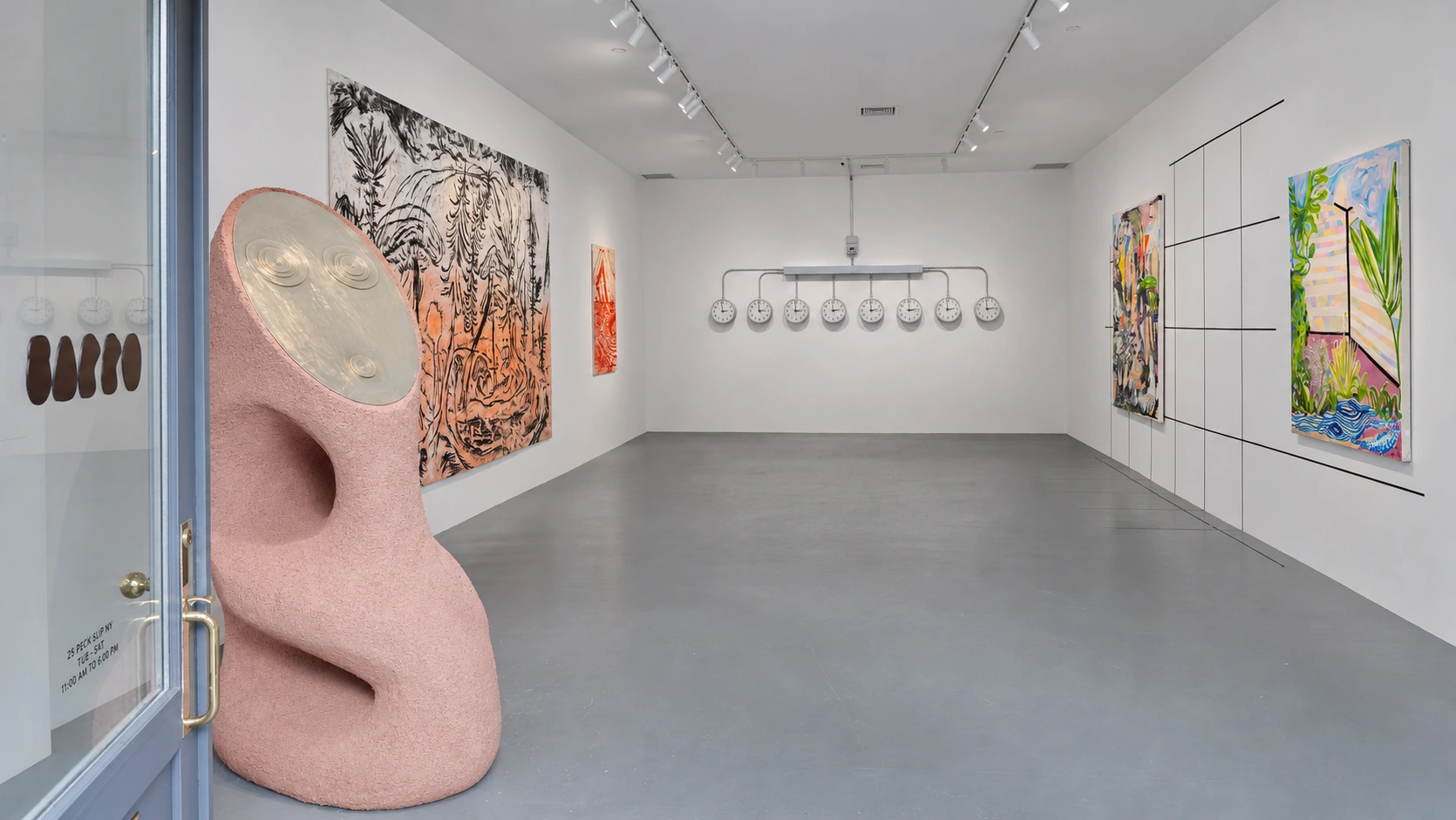
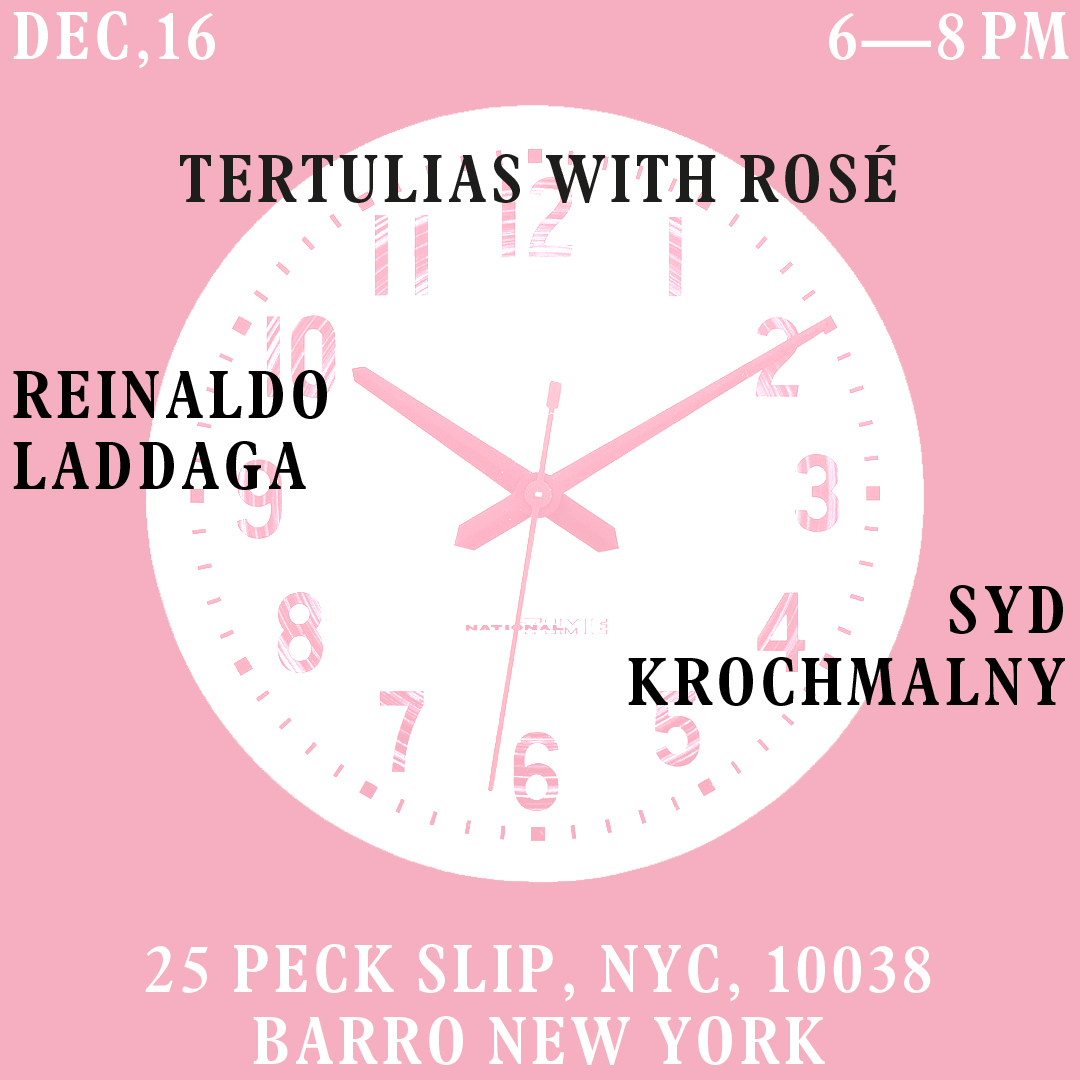
It was the first Tertulias with Rosé, the series of conversations accompanying the gallery's exhibitions in New York. Reinaldo Laddaga was talking with Syd Krochmalny at the Peck Slip space, during Futurity. The invitation promised time, art, and the fate of humanity. Quite an agenda for two hours.
Laddaga had been working on a trilogy about the United States during the Trump era. The program introduced Los hombres de Rusia, a novel in which far-right militants try to occupy Disney World and establish another government, and Atlas del eclipse, whose narrator walks through pandemic New York with an imaginary Edgar Allan Poe. Between a theme park taken over by fanatics and a city toured with a dead man, American reality had some respectable competition. At least nobody had to explain to Poe that something was wrong.
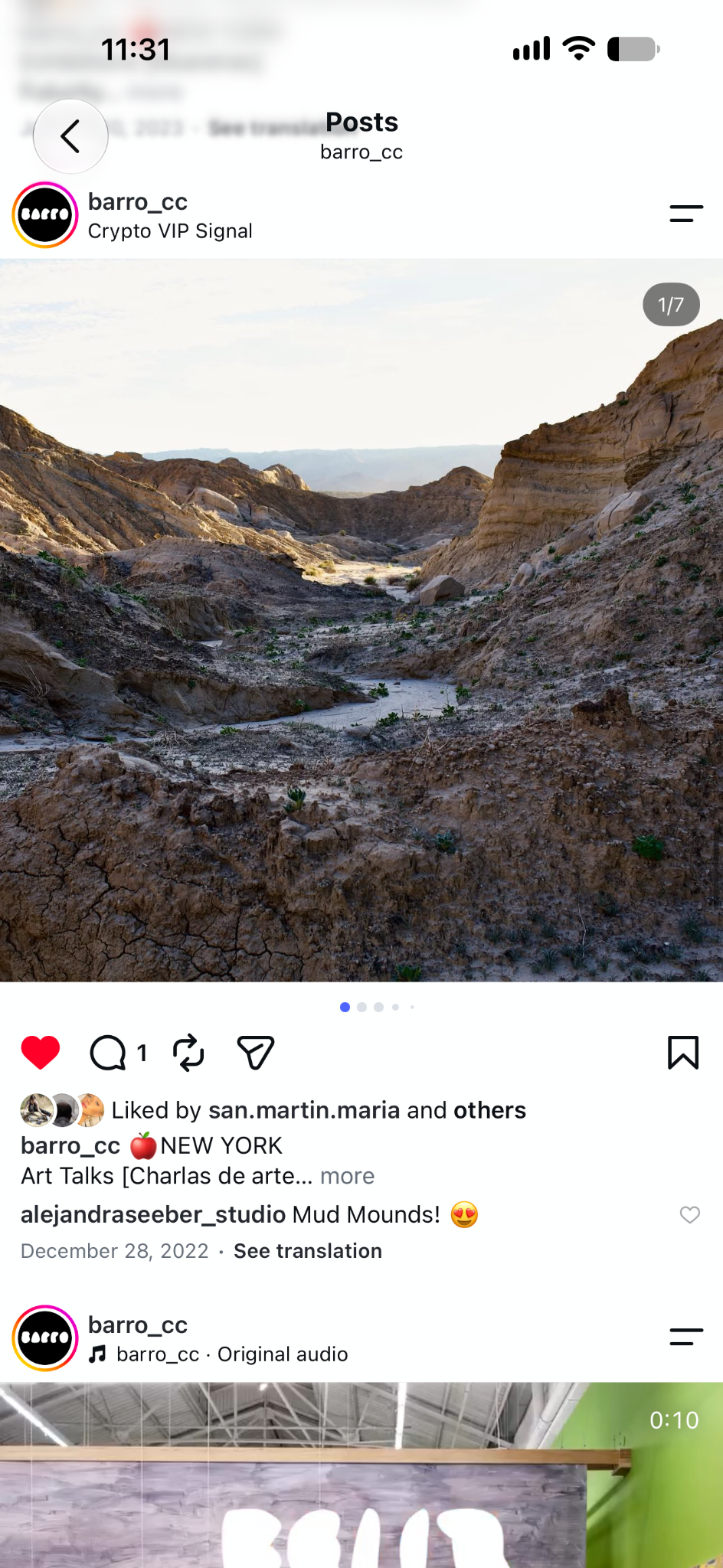
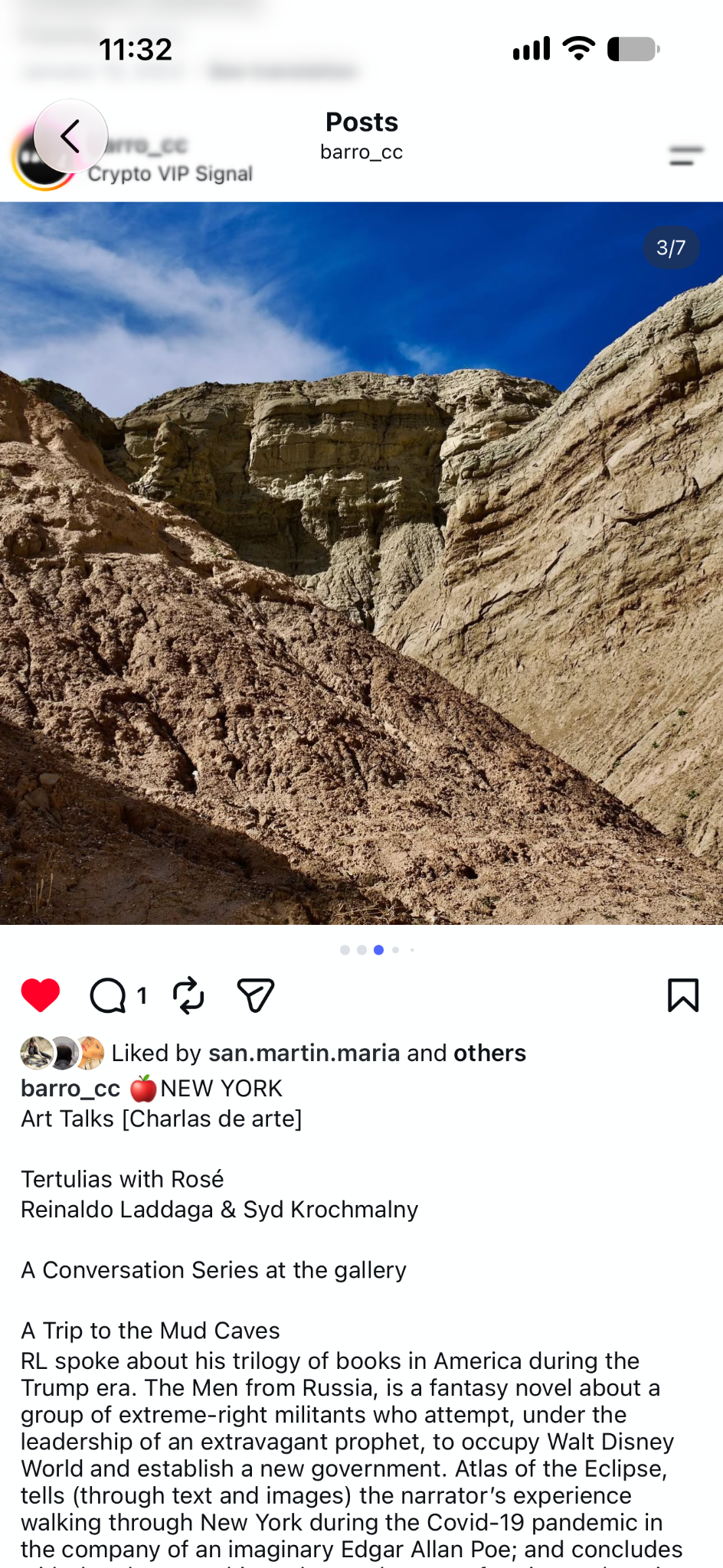
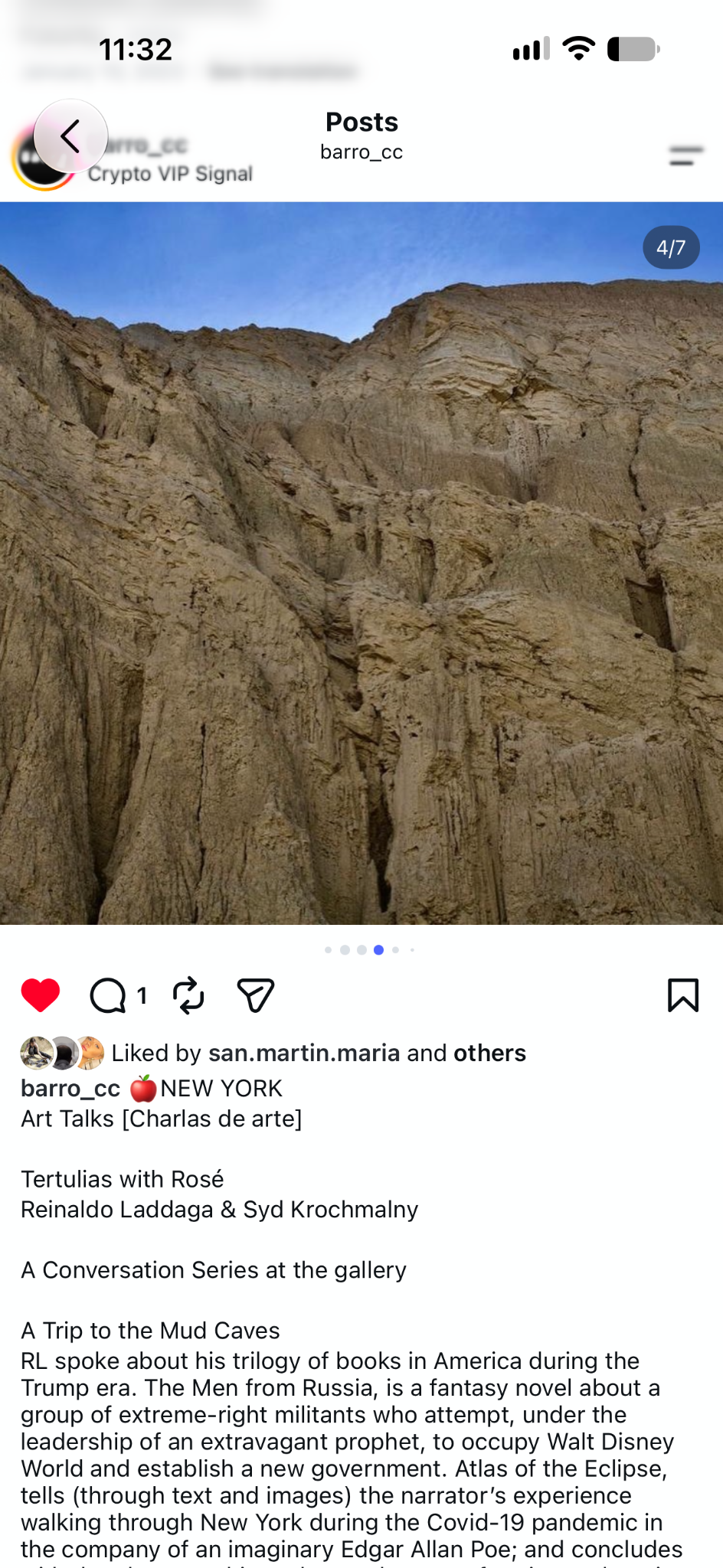
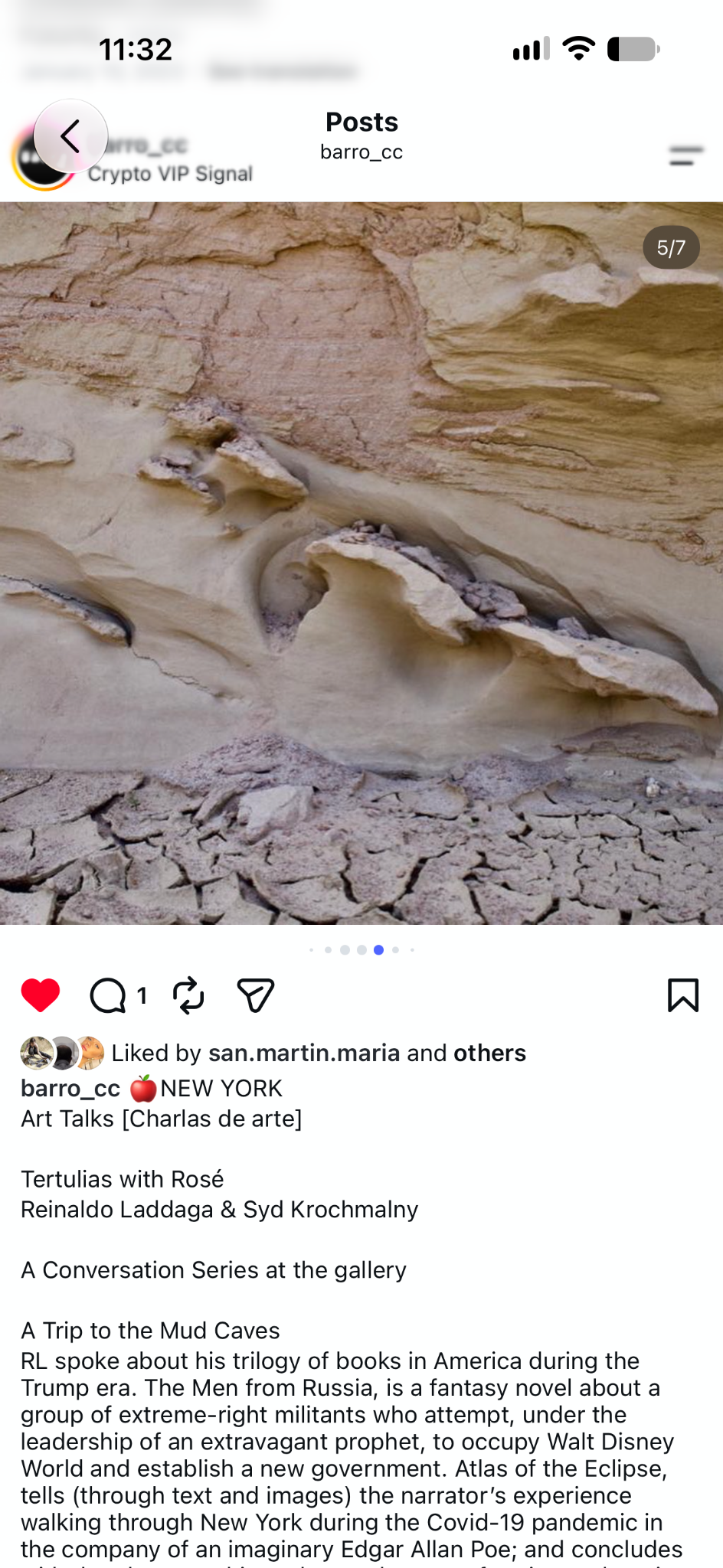
In Atlas del eclipse, those walks led to a trip through Southern California, told in words and photographs. One of the photographs Laddaga projected during the conversation shows eroded slopes, layers of earth, cracks, and low vegetation you have to stop to find. Nobody poses to give us a sense of scale. There isn't a sign saying “future,” either. Looking at it again, that's what interests me.
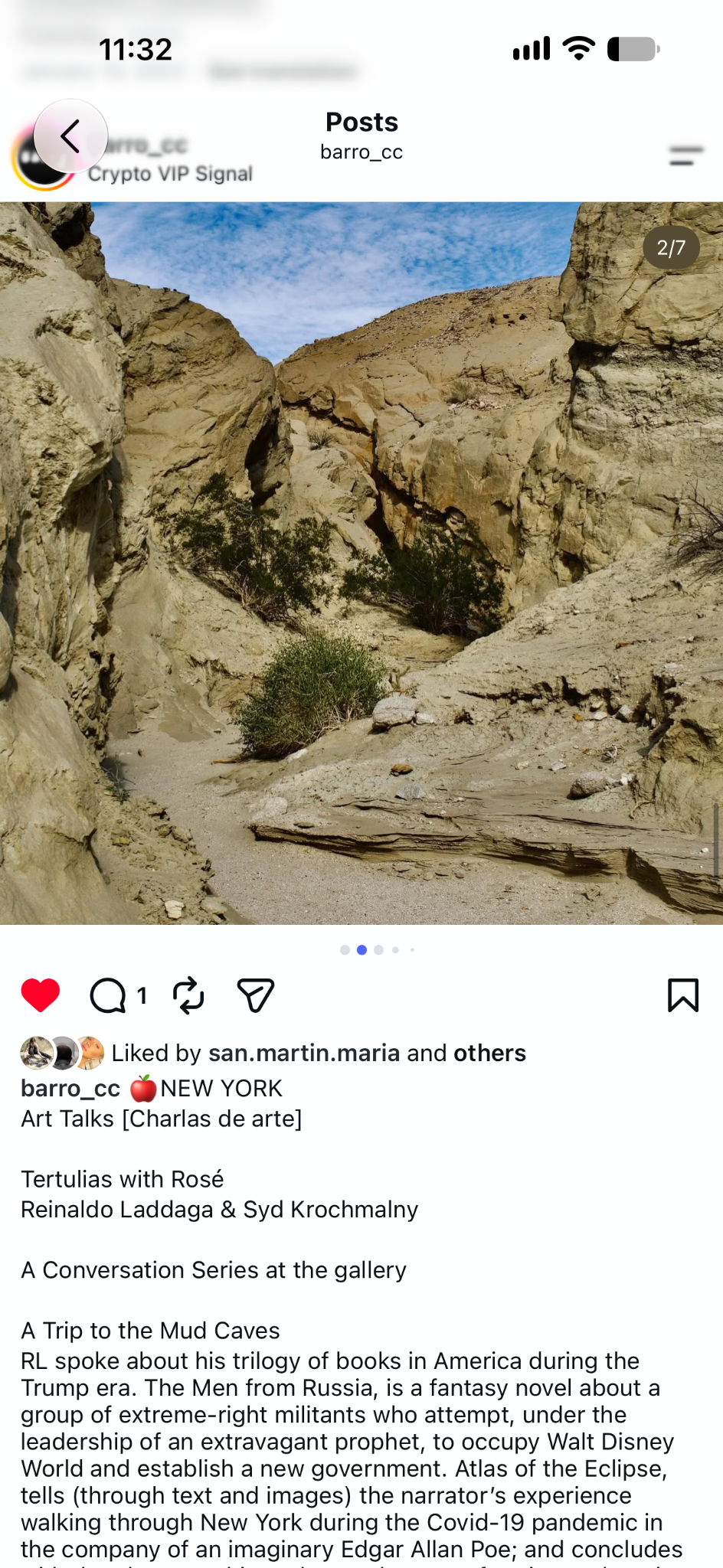
A landscape like this is easily drafted into the imagery of the end. Remove people from the frame and we believe we're looking at the world after our disappearance. But someone was there to take the photograph. There was a body, a position, a route. The image holds on to that small contradiction: we want to contemplate our absence, and we reserve the best seat for watching it.
I'm more interested in that presence outside the frame than in a mountain turned into an illustration of collapse. A photograph can open a question that an exhibition title already considers settled. Futurity brought together work by Gabriel Chaile, Matías Duville, Marcelo Pombo, Alejandra Seeber, Amalia Ulman, and Agustina Woodgate. Within that frame, thinking about what comes next was inevitable. The photograph makes me pause over what was happening while someone took it: a light, a patch of ground, a journey whose duration I don't know.
The procedure comes into focus alongside another conversation I published later. In September 2024, at The Slip, Nicolás Guagnini asked Laddaga about his move from writing to photography. Their dialogue appeared in my pages as Three Natural Books. Laddaga described a practice of immersion: spending hours in an environment, taking a picture every few seconds, dwelling as little as possible on identifying what he saw. Later he discarded most of the shots. The ones that remained had to hold together without becoming entirely explicable.
His formulation was precise: “I photograph events, not things.” An image caught an appearance, something happening as he passed. Almost five hundred photographs were arranged in three projected sequences, with about eight seconds for each. Taking the picture could be almost instantaneous; looking at the whole demanded a different kind of time. There's a difference between accumulating images and making that accumulation change our pace.
I think of Warhol with his camera always ready: friends, rooms, meals, the street, life photographed without waiting for it to become an important event. The connection works for me as a comparison, not a family tree. The camera makes everyday attention available. In Laddaga, that availability coexists with rigorous selection and an effort to suspend the name of whatever appears. Passing through something without entirely possessing it. For someone like me, who has an opinion before the first slide is over, that takes work.
Another development of this practice appeared in La Internacional Argentina II. In This Winter Green, eighty photographs of the New York winter occupied a rotating display stand: forty were visible, and the rest could be swapped in. The viewer changed the available landscape. Between the photograph taken in passing, the sequence running its course, and the stand someone can rearrange, the image ceases to be the journey's final destination. It lets others pass through.
Between the 2022 gathering, the 2024 conversation, and the 2025 display stand, a transformation becomes traceable: each format redistributes the time and authority of the person looking. Bringing them together now makes that visible.
The political question emerges there, in the authority we exercise over what we look at. Grand narratives of the future tend to assign the parts in advance: what will disappear, what will survive, what deserves to be preserved. An image ends up serving as evidence for a verdict already written. Laddaga interests me when his way of photographing makes us postpone that verdict. What we saw, and how it relates to everything else, remain to be decided.
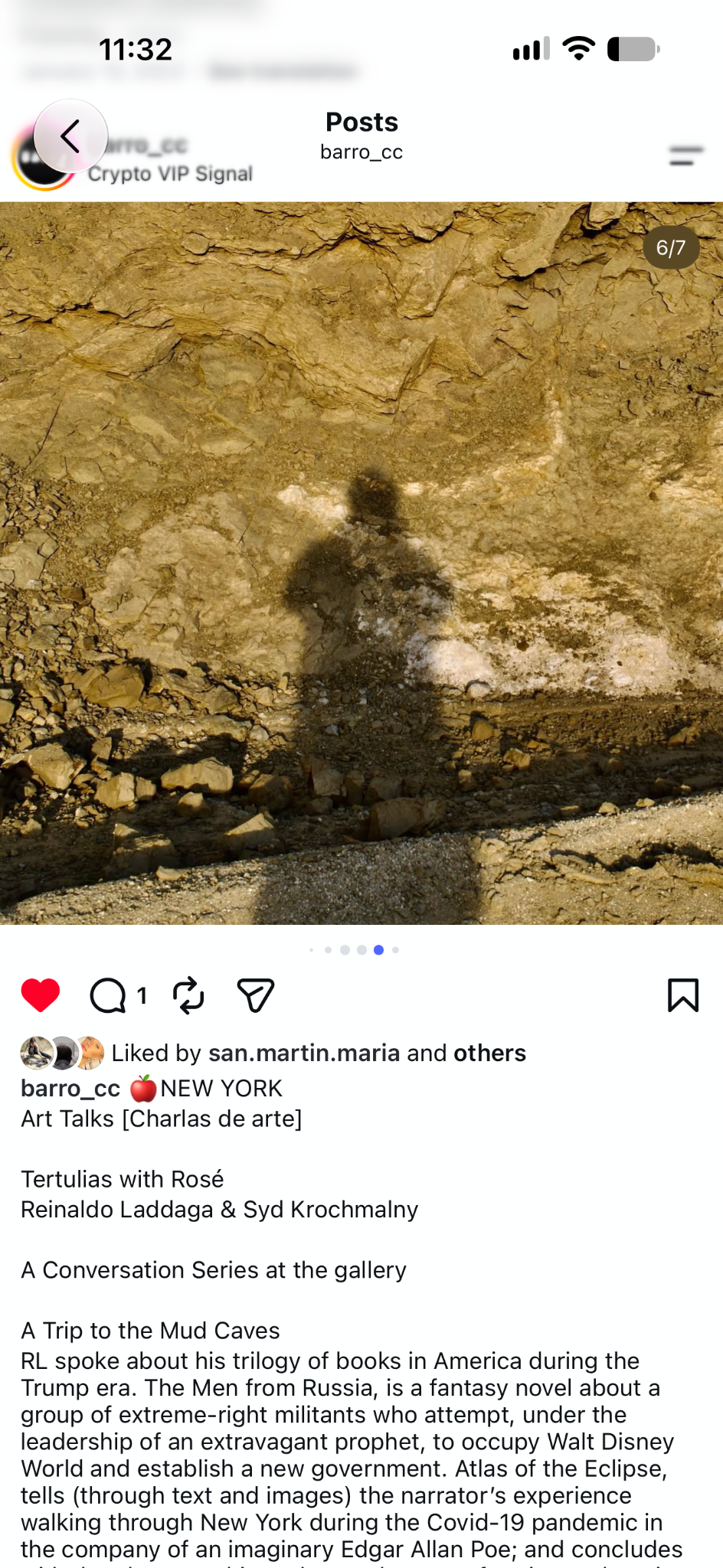
I went to hear about the fate of humanity. Today I return to a crack in the earth, to plants almost lost in the frame, and to the person who passed through without appearing in the photograph. I still have work to do there. The fate of humanity can wait until I've finished looking.
From the event archive
Related reading: Three Natural Books · La Internacional Argentina II · Andy Warhol Foundation: Stanford Photo Archive.