
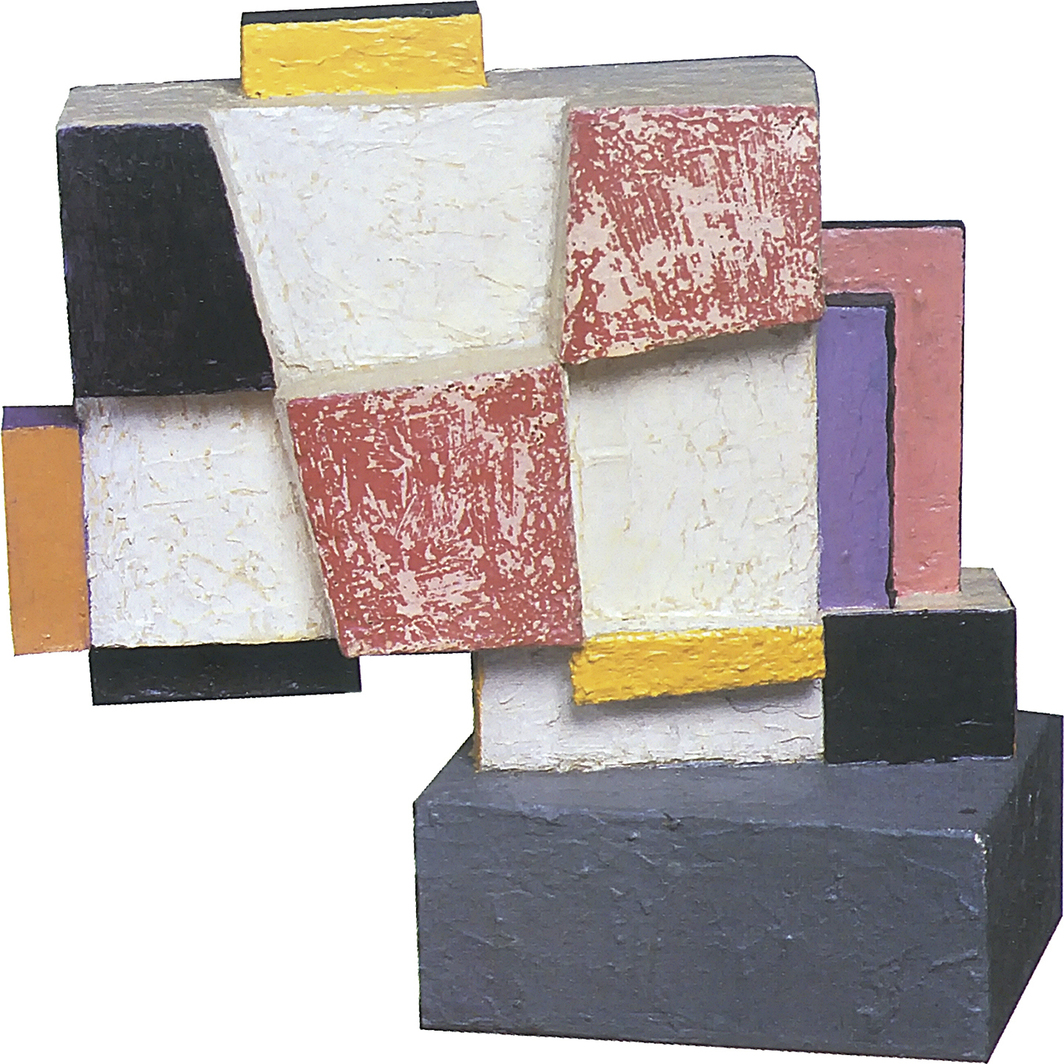
Taking the train from New York City, following the Hudson River north, you arrive at the Tang Museum in the picturesque town of Saratoga Springs. This summer, you can visit the exhibition "Vorágine: Yente and Cecilia Biagini," which brings together works showcasing the possibilities that abstraction opened up for artists throughout the Americas. Yente, the artistic name of Eugenia Crenovich (1905-1990), was a pioneering figure in abstraction in Argentina from the 1930s onward. Cecilia Biagini (b. 1967) is a contemporary interdisciplinary artist who has lived in Brooklyn since the late 1990s.
Yente, born in Buenos Aires, began exploring abstraction in the late 1930s after meeting the Italian-Argentine artist Juan Del Prete, who would later become her husband. Although her artistic career spanned five decades, she has only recently been recognized as a precursor to the best-known Río de la Plata avant-garde groups, such as the Asociación Arte Concreto-Invención, Madí, and Perceptismo. Cecilia Biagini, also born in the Argentine capital, began her artistic career as an actress and photographer in the underground scene of the mid-1980s. In 1998, she moved to New York and has since exhibited her paintings, sculptures, and installations in the United States and Argentina.
The exhibition presents a selection of Yente's works from the period between 1938 and 1963, in which the artist engaged with the visual languages of the avant-garde, working in diverse media such as sculpture, painting, collage, artist's books, and textiles, moving between figuration and abstraction. Biagini's equally omnivorous approach to artistic creation has led her to embrace installation, sculpture, painting, and music. Her works at the Tang Museum, spanning the last fifteen years, experiment with a rehearsed improvisation that brings form, color, and space into expressive exchange. They reinterpret modernist codes, with abstraction persisting as a utopian universal language. Together, the works of the two artists tell a story of women in abstraction.
The exhibition's title comes from Yente's 1963 artist's book "Vorágine" and serves as a vivid metaphor for the creative force and dynamic nature of Yente and Biagini's approaches to artistic production. In recent years, artists—like Yente—who had been relegated to the margins of art history have gained greater prominence, generating a sense of lineage for women of current generations. By exploring the works of both artists, the exhibition seeks to enrich the histories of women artists and simultaneously expand the subjects and geographies of abstract art.
Curated by Dr. Ayelén Pagnanelli, "Vorágine: Yente and Cecilia Biagini" can be visited at the Tang Museum until September 22.